
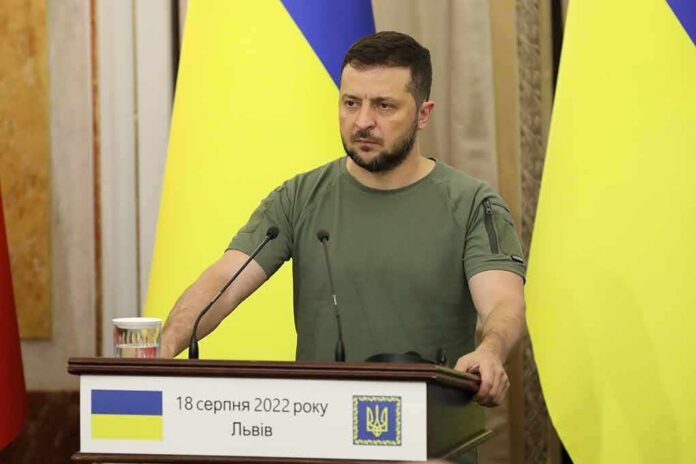
Ukraine’s wartime election freeze collided with President Trump’s public call to replace Volodymyr Zelensky, triggering a sharp rebuke from Kyiv and fresh debate over democratic legitimacy in a war zone.
Story Highlights
- Trump urged Ukraine to “get a new leader,” saying Zelensky missed chances to make deals.
- Zelensky’s regular term ended in 2024, but he remains in office under continuity rules.
- Ukraine’s security council says elections are barred during martial law.
- Zelensky said elections could happen after a 60-day nationwide ceasefire.
Trump’s Replacement Call and Zelensky’s Response
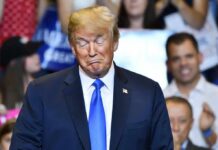
President Trump said Ukraine should replace President Volodymyr Zelensky, arguing that Ukraine needed “a new leader who can make a deal.” He claimed Zelensky passed on multiple chances to settle the war. Reporting captured Trump’s on-record push for a leadership change and his critique of Zelensky’s negotiating choices. Zelensky fired back, questioning how people could vote during an active war. He pointed to battlefield danger and legal barriers that block a nationwide ballot while martial law stands.
Zelensky also challenged Trump on substance. He said a valid election needs a real ceasefire that covers the whole country. He asked for sixty days of total calm to set up voting, protect citizens, and include troops and displaced voters. He said Ukrainians in areas held by Russia must vote freely for any result to be legitimate. He said if Russia pauses attacks for two months, Ukraine could organize elections and prove its democracy holds under fire.
What Ukraine’s Law Allows During Martial Law
Ukraine’s leaders cite national law to explain why voting has not happened. The National Security and Defense Council says no presidential or parliamentary elections can occur during martial law. That rule aims to stop a power vacuum and protect people from attacks on polling places. Legal analyses add that the constitution keeps an incumbent in office until a successor is sworn in, which is why Zelensky remains president despite his term expiring in 2024.
Outside analysts have warned against forcing a wartime vote that could be chaotic or deadly. The Institute for the Study of War says Ukrainian law and constitutional limits clearly bar elections while martial law lasts. It argues that pushing rushed elections during shelling would play into Moscow’s hands. The group says the legal block is not a loophole but a wartime shield for Ukraine’s democracy until conditions improve enough to run a safe and fair vote.
The Core Dispute: Negotiations, Legitimacy, and Endgame
Trump’s core charge is about performance, not only process. He says Zelensky “could have made many deals” to end the war sooner. That raises a hard test: would a different leader actually change Russia’s war aims. The public material tied to that claim does not cite specific draft deals, signatories, or dates that Kyiv rejected. That gap gives critics room to challenge the argument’s evidence even as they debate Ukraine’s election limits.
Zelensky offers a conditional path to an election to answer the legitimacy question. He says a two-month ceasefire would allow Ukraine to change procedures, secure polling sites, include soldiers, and help displaced citizens vote. He frames that plan as proof that Ukraine is not dodging democracy but waiting for basic safety. Until then, Kyiv’s position is that elections are unlawful under martial law and unsafe under fire, so leadership changes must wait for a true pause in combat.
Why This Matters for U.S. Voters and Taxpayers
American taxpayers and service members bear real costs from this war, from higher prices to drained stockpiles. President Trump’s pressure spotlights a key accountability question: if the war cannot end on the battlefield soon, what diplomatic off-ramp is real. Ukraine’s law blocks an immediate election, but Zelensky’s stated ceasefire condition creates a concrete test. If Russia refuses a nationwide pause, talk of a quick leadership swap stays theoretical for now.
For conservatives who want clear goals and an exit, two facts now anchor the debate. First, martial law closes the ballot box until conditions change, so outside calls for instant elections will hit a legal wall. Second, a verified sixty-day ceasefire would open that door and let Ukrainians choose. That puts the burden on Moscow to halt attacks, and on Kyiv and allies to prove they can secure and run a real vote when the guns go quiet.
Sources:
mediaite.com, theglobeandmail.com, yahoo.com, britannica.com, understandingwar.org