
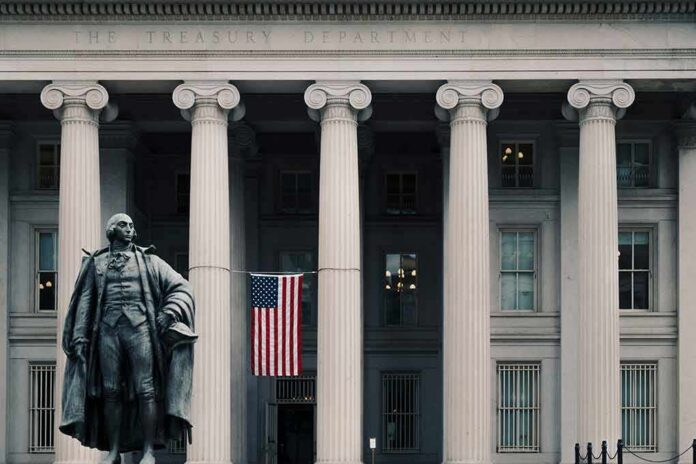
Treasury hit Bank of America with a record $1.2 billion penalty after the bank failed to report over $5 billion in suspicious transactions that included risks tied to Chinese money-laundering networks.
Story Highlights
- Treasury cited more than $5 billion in unreported suspicious activity at Bank of America.
- Officials said over $1 billion involved national-security and priority illicit-finance risks.
- The package includes a $1.2 billion Financial Crimes Enforcement Network penalty and a $750 million Office of the Comptroller of the Currency penalty.
- Bank of America admitted willful Bank Secrecy Act violations in the settlement, according to reports.
Treasury Details Record Penalties and Missed Reports
The United States Department of the Treasury announced record enforcement actions against Bank of America on October 13, 2026. Treasury said the bank failed to timely report more than $5 billion in suspicious transactions to the Financial Crimes Enforcement Network. Officials added that over $1 billion of that activity involved national-security and other priority risks, including patterns tied to Chinese money-laundering networks and trade-based schemes near the southwest border. The scale signals major breakdowns in required anti-money-laundering safeguards.
The enforcement package features a $1.2 billion civil penalty by the Financial Crimes Enforcement Network and a separate $750 million penalty by the Office of the Comptroller of the Currency. Coverage identified the Office of the Comptroller of the Currency action as among that regulator’s largest penalties, showing multiple agencies found serious failings inside the bank’s controls. This parallel approach is meant to push faster fixes and send a clear deterrent message across the financial sector.
What Bank of America Admitted and Why It Matters
Contemporaneous reporting states the settlement included an admission that Bank of America willfully violated the Bank Secrecy Act by failing to keep a compliant anti-money-laundering program, conduct required checks on foreign correspondent accounts, and file suspicious activity reports when needed. That admission undercuts any claim that this was a minor paperwork slip. The Bank Secrecy Act sets clear duties to know customers, monitor activity, and alert the government to suspect funds that can fuel crime and hostile regimes.
Reports also noted the bank moves money on a vast scale, which makes weak controls especially risky for the country. One outlet said Bank of America processed more than $9 trillion in transactions during the relevant year while missing reports on over $5 billion in suspicious activity. When a large institution falls short, threats can spread fast through the system. That includes fraud networks and foreign adversaries who try to hide money flows inside normal banking traffic.
National Security Stakes and Policy Direction Under Trump
Treasury’s description of activity tied to Chinese money-laundering networks and border-linked trade schemes shows the national security edge of this case. Criminal groups and foreign actors test American banks every day. They seek gaps to move fentanyl profits, cybercrime proceeds, and funds that can aid hostile states. President Trump’s administration has pressed for tougher financial enforcement to protect Americans from crime, drugs, and foreign influence that exploit our banking system.
Bank of America has been hit with $1.21 billion in federal penalties after failing to timely report more than $5 billion in suspicious transactions.
More than $1 billion involved potential national security risks, including activity linked to Chinese money-laundering networks… pic.twitter.com/SJu0Y5SOLr
— Cost of America (@CostOfAmerica) October 14, 2026
Recent history shows regulators are using larger, coordinated penalties and admissions to force change across big banks. A Congressional Research Service review found that monetary penalties in Bank Secrecy Act and anti-money-laundering cases rose sharply after 2012, with a focus on stronger deterrence and accountability. The Bank of America action fits that trend but stands out for its size, its national-security link, and the multi-agency muscle behind it. That combination signals clear expectations going forward.
What This Means for Customers, Markets, and Accountability
Customers should not see daily account changes from this action, but the bank must commit resources to fix controls fast. That means stronger monitoring, better due diligence on foreign partners, and timely suspicious activity reports. Regulators use these reports to track crime and protect our communities. The penalties also warn other institutions that delay or weak oversight will cost more than building the right systems at the start.
For conservatives, this case hits core principles: law and order, national sovereignty, and equal rules for the powerful and the small. No bank is above the law. When a giant player misses red flags tied to foreign networks and border risks, Americans pay the price in drugs, fraud, and lost trust. Firm, fair enforcement under President Trump backs the rule of law, shields families from crime, and tells Wall Street that compliance is not optional—it is part of their duty to this country.
Sources:
nbcnews.com, home.treasury.gov, cnbc.com, finance.yahoo.com, easternherald.com