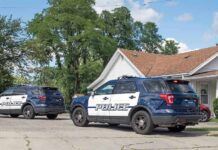


Newly released police video shows a Maryland Democratic lawmaker telling officers his “driver” parked his SUV—while separate surveillance footage reportedly shows the senator behind the wheel moments earlier.
Story Snapshot
- Body-camera and surveillance videos raise questions about a Maryland senator’s account.
- Police did not conduct a sobriety test and let a different licensed driver remove the SUV.
- The SUV had hit a parked car, then was left on a sidewalk against a tree during session week.
- The episode spotlights unequal accountability and weak enforcement that erodes trust.
Video Evidence Challenges Senator’s “Driver” Claim
WBFF’s Spotlight on Maryland reported that surveillance video contradicted Maryland State Senator C. Anthony Muse’s claim to police that a driver parked his Land Rover on a sidewalk and against a tree. The reporting says the video shows Muse behind the wheel before he exited and walked away alone. The station also released body-camera clips from the scene, where the senator told officers, “My driver actually parked here,” repeating that someone else had left with the keys.
Spotlight’s summary ties the two records together: the street surveillance indicating who drove and the body-camera recording capturing the senator’s story to officers. That combination is what sparked public concern. Residents saw a damaged parked vehicle in the neighborhood and an elected official’s SUV jammed onto a sidewalk against a tree. People wanted to know why a basic, even routine, next step—testing for impairment—did not follow after officers learned the vehicle had struck another car.
Police Response: No Field Sobriety Test, Car Released
WBFF reported Annapolis police asked Muse about drinking, recorded his statement that he had “one drink,” and then allowed another licensed driver to take the SUV from the scene. The agency did not pursue a broader impairment investigation that night, according to the outlet’s review of records. The scene occurred during a special legislative session week, which added scrutiny over whether status or connections softened the response compared with how everyday drivers are treated.
The body-camera timeline matters here because it shows calm, low-pressure questioning, not a chaotic crash scene. Officers gathered information, noted damage, and accepted the senator’s “driver” explanation without conducting roadside testing or seeking a breath sample, as reported. That choice left open questions about equal enforcement. Many families know how strict traffic stops can be, especially after a contact crash. They expect fair, consistent rules, not a pass for the politically connected.
Why Equal Enforcement Matters to Public Trust
Equal enforcement is a bedrock of ordered liberty. When a vehicle hits a parked car and ends up on a sidewalk, most drivers expect tough questions, not a handoff and a wave. The Annapolis response, as described by WBFF, undercuts that trust. The larger pattern is clear: when video and official actions do not match common-sense steps, people lose faith in local government and the law. That loss of faith feeds a belief that insiders play by different rules.
Research on police video further shows how partial clips can shape outcomes. Academic work finds about one-third of body-camera videos used in court do not capture the full event, and completeness strongly affects interpretations. In this case, Spotlight paired street surveillance with body-camera footage to address that gap. The surveillance angle reportedly shows who drove, while the body-camera captures what was said to officers. Together, those records raise pointed questions that call for clear answers from city leaders.
Accountability Steps Maryland Leaders Can Take Now
City officials can act without delay. First, release a full, unredacted incident report and a complete timeline of officer actions that night, including who made the decision not to test. Second, state clearly what policy guides impairment screening after a crash, and confirm whether officers followed it step by step. Third, explain why the SUV was released and whether that is standard when a driver claims someone else parked after a collision with property damage.
Lawmakers should also commit to one standard for all drivers, with clear triggers for field sobriety tests and chemical tests after contact crashes. If officers have discretion, leaders should define it in plain language so citizens can judge fairness. Conservatives know law and order means nothing if the powerful skate while regular people face the book. Transparency here defends the rule of law, deters future abuse, and restores trust for families who follow the rules every day.
Sources:
thegatewaypundit.com, foxbaltimore.com, youtube.com, wbal.com