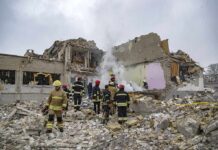


Aerial footage from southern Japan shows shattered towns and a collapsed shopping mall, revealing how fast life can change when the ground moves.
Story Snapshot
- A powerful quake in Kumamoto Prefecture collapsed a major mall and damaged homes, roads, and bridges.
- Aerial video two days later shows extensive destruction, fires, and rescue crews still searching for survivors.
- Japan’s disaster story is a warning about infrastructure, energy, and preparedness that American families cannot afford to ignore.
- Media drones capture dramatic scenes, but the real struggle is local people trying to rebuild their lives from the rubble.
Aerial footage shows the true scale of Japan’s southern quake
A powerful earthquake struck Japan’s southern Kumamoto Prefecture, with officials reporting a magnitude around 7.1 and heavy shaking near the city of Kumamoto. Aerial video released by the Associated Press shows rural communities two days later, still covered in debris, with flattened homes and damaged structures as people try to get back to normal life. Drone and helicopter shots from news outlets reveal collapsed shrines, broken bridges, and scarred roads stretching across Kyushu.
The quake hit at shallow depth, making the shaking more severe and more damaging to buildings, roads, and older infrastructure. Footage from Kumamoto shows burning structures, overturned trains, and a shopping mall with part of its structure collapsed, leaving workers trapped and missing. In those aerial views, you can see rescue vehicles clustered around large ruins and scorched lots, a clear sign that search-and-rescue teams are still working even days after the first shock.
Collapsed mall, toppled chimneys, and communities in crisis
Reports from Japan’s media and international outlets say the Aeon Mall in Kumamoto suffered a partial collapse after the shaking, followed by an explosion that ripped through part of the building. Photos and video show large sections of the mall torn open, twisted steel, and shattered glass, with firefighters and police trying to reach people inside. The Associated Press aerial video explains that the quake also toppled a factory chimney and flattened nearby homes, killing at least 23 people in the surrounding communities.
Other aerial packages from Nippon Television and global broadcasters show long rows of houses with collapsed roofs, cracked walls, and debris piles in what were once quiet neighborhoods. Power lines hang low over buckled streets, and some roads are split or blocked, cutting off easy access for ambulances and repair crews. Kyushu residents face the dual threat of continued aftershocks and landslides, as officials warn people to stay alert and keep away from unstable hillsides and damaged buildings.
Japan’s struggle and what it means for American preparedness
Japanese authorities report thousands of homes without power and major damage to roads and bridges, while rescue teams search for missing workers and trapped residents in the mall and nearby buildings. Bullet trains and some airport operations were halted or slowed while engineers checked tracks, tunnels, and terminals for hidden structural problems after the quake. Fire and police services in Kumamoto used helicopters and drones to scan the region from the air and map where help was needed most.
Japan: Hospitals struggle after deadly earthquake
Rescuers are searching for survivors after a magnitude 7.1 earthquake struck southern Japan, killing over a dozen people and causing widespread damage. https://t.co/A8YMMi8ULP
— Br Mick Donados StMdePorres erm (@UrbanHermitStL) July 30, 2026
For American readers, especially conservatives who care deeply about self-reliance and local control, these scenes underline a simple truth: when disaster hits, faraway bureaucrats are not the first line of defense. Families, local responders, and sound infrastructure make the real difference, and weak energy grids or neglected roads leave ordinary people at risk. Japan’s heavy use of aerial surveillance also raises questions many on the right ask at home: how do we balance smart disaster tools with basic privacy and limited government?
Media framing, real suffering, and lessons for policy
Major outlets all describe “extensive damage” from the Kumamoto earthquake, yet they use slightly different numbers for magnitude and casualties as reports evolve, a common pattern in fast-moving disasters. Drone and helicopter footage compress the worst scenes into a few striking shots, which can make one collapsed mall or burning block look like the entire region, even when damage is uneven. Still, the core facts are clear: a strong quake collapsed major structures, killed over a dozen people, and left thousands more facing blackouts, broken homes, and fear of more shaking.
Conservative readers know that nature does not respect national borders or global talking points. While climate activists and central planners often seize every disaster to push new spending sprees or control over energy and land use, the Japan quake’s real lesson is more basic. Strong local building standards, honest reporting, reliable power, and empowered communities save lives. Any policy debate in America after watching this kind of footage should focus first on protecting families and critical infrastructure, not expanding federal reach for its own sake.
Sources:
bbc.com, aljazeera.com, npr.org, nytimes.com, abcnews.com, cbsnews.com, reuters.com