
As Poland reveals the true cost of arming Ukraine, nearly half its citizens now say “enough” to a war they feel is draining their wallets and testing their patience.
Story Snapshot
- Poland has sent over forty-six military aid packages to Ukraine worth more than 16 billion zloty.
- New data show most of that aid went out in 2022–2023, with a steep drop in recent years.
- Polling now finds around 46 percent of Poles want to stop arming Ukraine and see the aid as excessive.
- The fight over aid mixes war fatigue, high costs, and anger over “proxy war” politics and history disputes.
Poland Opens the Books as War Fatigue Takes Hold
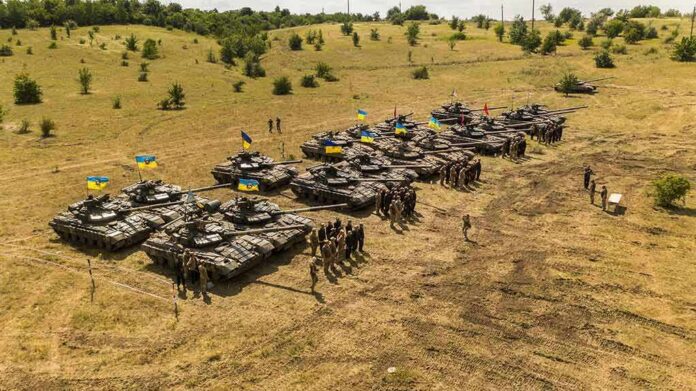
Poland’s government has now pulled back the curtain on its wartime support for Ukraine, and the numbers are big enough to spark a political earthquake at home. The Ministry of National Defense disclosed that completed military donations since Russia’s full-scale invasion total about 16.45 billion zloty, or roughly 3.8 billion euros, with almost 90 percent of that sent in the first two years of fighting. These figures confirm what many Poles suspected: their country carried a huge share of the early war burden while other European states hesitated.
Government data and independent reports show that from 2022 through autumn 2025, Poland delivered 46 military aid packages to Ukraine, consisting of weapons, ammunition, and other gear, with additional packages still being prepared. In 2022 alone, the value of transferred military equipment hit 7.23 billion zloty, followed by another 5.63 billion zloty in 2023–2024. When training, logistics, maintenance, and medical help are added, the total value of military support had already topped 18 billion zloty by March 2025. For a country still catching up economically with Western Europe, those are major “guns versus butter” trade-offs.
Nearly Half of Poles Say Aid Has Gone Too Far
As the real costs become clear, public patience is wearing thin. A recent survey found that 44.8 percent of Polish citizens view their country’s military aid to Ukraine as excessive. When asked to judge the scale of support, the largest group of respondents picked the “too much” option, signaling a sharp shift from the early days of the war, when Polish streets were full of Ukrainian flags and calls to “stand with Kyiv.” This near-half share now favoring a stop or sharp cut in arms deliveries marks a major political warning light for Warsaw.
Researchers who track defense opinion across Europe say this pattern is not unique. Support for foreign military aid is often high right after an invasion when emotions run strong, but it fades as conflicts drag on and economic worries rise. Studies of North Atlantic Treaty Organization (NATO) countries show that while people may back the alliance in principle, they become far more cautious when faced with real budget costs and long-term deployments. Poland now fits that script: citizens still see Russia as a threat, but many are no longer willing to write what feels like a blank check to Kyiv.
Frontline Role, High Defense Burden, and Growing Resentment
On paper, Poland looks like a model NATO defender. Reports note that it spends around 4.5 percent of its gross domestic product on defense, the highest share in the alliance, and is working toward a 500,000-strong force. Warsaw has bought advanced American equipment such as Abrams tanks, Apache helicopters, and F-35 jets, plus major South Korean systems, turning the country into a forward arsenal on NATO’s eastern flank. These investments make it easier to send gear east—but they also increase the sense among ordinary Poles that they are paying twice, for their own rearmament and for Ukraine’s.
Poland has also served as the main pipeline for almost all Western weapons flowing into Ukraine, with government and research estimates suggesting that over 90 percent of military supplies transit Polish territory. That has real strategic value for the West, but it also means Poland carries the logistical strain and potential risk of being seen by Moscow as a key enabler. As Washington debates troop levels in Europe and some American voices question endless foreign aid, many conservative-minded Poles are asking why their country should remain the primary hub and paymaster if others will not fully share the load.
Declassification, Historical Tensions, and the Next Phase of the Debate
To answer critics and push back on claims of secret deals, Defense Minister Władysław Kosiniak-Kamysz ordered the declassification of all military aid donations to Ukraine from 2022 to 2026, after talks with Prime Minister Donald Tusk. Officials released detailed figures showing aid worth about 16.45 billion zloty, with only 1.55 billion zloty provided under the current government from 2024 onward. This breakdown makes clear that the early conservative-led government carried the bulk of the military cost, while the new coalition has already slowed the pace.
At the same time, old wounds are being reopened. Analysts point to long-running disputes over World War Two history, including the legacy of Ukrainian nationalist Stepan Bandera and the Volhynia massacre, as a growing drag on goodwill between the two nations. Polish commentators who oppose further aid use these grievances to argue that Ukraine is not always a reliable partner and that Polish leaders must put national interests first. Combined with rising living costs at home, these arguments are gaining traction with voters who feel they have carried enough of Europe’s burden already.
Sources:
zerohedge.com, newsukraine.rbc.ua, thedefensepost.com, news.liga.net, ua.news, pewresearch.org, tandfonline.com, muse.jhu.edu, gmfus.org, news.gallup.com