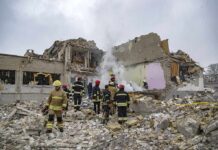


Ukrainian officials say two Russian drone strikes hit a busy shopping center in Kryvyi Rih, killing 16 people and injuring about 130, with the second blast landing as rescuers worked the first scene.
Story Highlights
- Authorities report 16 dead and around 130 injured after two strikes on a mall
- Second hit came about 30 minutes after the first, targeting first responders
- Casualty numbers rose through the day as rescue crews searched the site
- Pattern matches prior “double-tap” tactics reported in Russia’s war on Ukraine
Reported Two-Stage Strike Hit Mall And Rescuers
Ukrainian authorities said Russian attack drones struck the Sunny Gallery shopping center in Kryvyi Rih in two waves on Friday. Officials reported the death toll rose to 16, with roughly 130 people injured as emergency crews pulled victims from rubble and smoke. President Volodymyr Zelensky said the second strike came about half an hour after the first, when firefighters and medics were already on site, intensifying the human toll and hampering rescue work.
Initial updates put the number of dead at 14 and then 15. Local and national officials later said the count reached 16 as search teams moved deeper into damaged sections of the complex. Media and local statements described dozens to more than a hundred injured, including children, with hospitals treating burns, shrapnel wounds, and smoke inhalation. Large fires inside the structure slowed access to several stores and corridors as teams worked through debris in dangerous conditions.
Casualty Counts Rose As Search Continued
Emergency crews faced shifting hazards as heat, collapsed materials, and falling glass complicated entry. Officials warned that casualty numbers often change during the first day of a mass-casualty incident. Authorities said teams continued to search for missing people while stabilizing walls and clearing hotspots. Reports from the scene cited overwhelmed triage points and calls for blood donations. The head of the local administration shared running tallies of the injured as ambulances cycled between the site and area hospitals.
National updates and wire reports tracked the grim climb in numbers. Broadcasters cited officials who described the strike pattern and the rising toll as rescue operations advanced. Social posts amplified images of the burning center and emergency crews moving stretchers under risk of more blasts. The rolling updates reflected the standard wartime reality: counts start low, climb as access expands, and settle only after full sweeps and hospital confirmations. That pattern showed here as well, with totals consolidating late in the day.
Attack Mirrors Documented “Double-Tap” Tactics
Ukrainian leaders and independent monitors have documented repeated “double-tap” incidents in Russia’s war. The method uses a second strike soon after the first, when first responders and bystanders gather to help. Investigators and human rights researchers say this approach maximizes harm and spreads fear among civilians and rescue workers. Prior reporting on Russia’s actions in Ukraine describes this tactic and its legal implications under the laws of war, which ban attacks on civilians and medical personnel.
The post from the official account of the State Emergency Service of Ukraine (DSNS) reports the consequences of a Russian strike on the “Sonyachna Galereya” shopping center in Kryvyi Rih on 21 August 2026.
The death toll has risen to 16 people, 9 are reported missing (including… https://t.co/Z4BPLnDBjA pic.twitter.com/xcKmLVU1jk— IgorGirkin (@GirkinGirkin) August 22, 2026
Friday’s two-wave strike, reported at roughly a 30-minute interval, matches those prior descriptions. The detail about rescuers being present during the second blast came directly from Ukraine’s president and emergency services summaries from the scene. International outlets and regional wires carried those statements, while local officials offered evolving casualty figures. The shared facts across these reports focus on the location, timing, two-hit pattern, and the confirmed rise in the death toll to 16 by evening local time.
Sources:
youtube.com, wdrb.com, nashaniva.com, newlinesmag.com