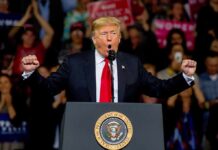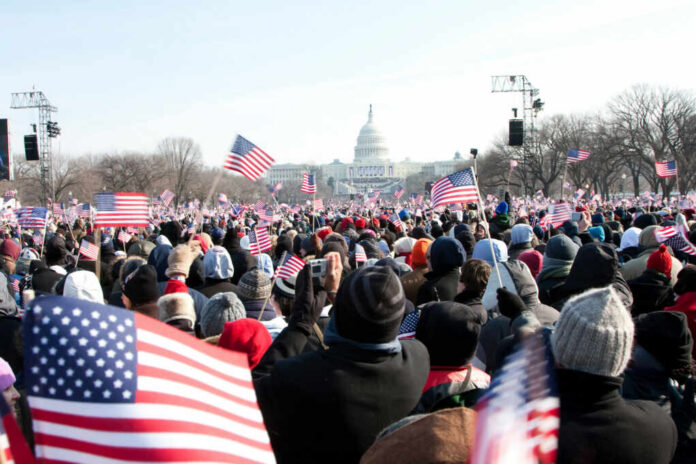
A legacy media narrative that paints every January 6 attendee as a violent extremist is clashing head‑on with Donald Trump’s insistence that many were “loving” supporters misrepresented by outlets like CNN.
Story Snapshot
- President Trump continues to challenge CNN and other outlets over their portrayal of January 6 supporters.
- Corporate media and government sources still frame January 6 almost exclusively as “insurrection” and “mass political violence.”[6]
- Key January 6 facts are now entangled in a broader fight over language, labels, and who controls the historical record.
- Conservatives face another test of media trust as Trump’s “day of love” rhetoric collides with establishment narratives.
Trump’s “Day of Love” Claim Versus the Official January 6 Narrative
During recent coverage and debates, President Donald Trump has repeatedly pushed back on how January 6 is described, emphasizing that many in the crowd came with “love in their heart” and were “hostages,” not hardened criminals. National Public Radio reporting on police body camera video contrasts that statement with scenes of officers being beaten, crushed, and assaulted in a tunnel entrance by rioters wielding flagpoles, chemical spray, and stolen shields. Established institutional accounts, including encyclopedias and government summaries, continue to label the event an “attack” or “mob assault” on the Capitol.[1][6]
That clash over language drives the current fight with networks like CNN. Trump and his allies have worked for years to soften the terminology around January 6, contesting labels like “insurrection” and portraying defendants as overcharged protesters or political prisoners. Analysts note that this is part of a broader political pattern: after major crises, elites battle over whether events are riots, protests, or terrorism, and those labels shape long‑term public memory. For conservatives, the question is whether media outlets are fairly distinguishing between violent actors and peaceful supporters, or collapsing everyone into one stigmatized category.
What the Record Shows About Violence and Media Framing
Public records and investigative reports acknowledge that serious violence did occur at the Capitol, including assaults on officers and coordinated attempts to breach secure areas.[1][6] National Public Radio’s body‑camera review details how more than one hundred officers were injured, and features officers describing stun guns, chemical irritants, and beatings inside a cramped tunnel. Defense Department accounts describe how the National Guard was mobilized as the scope of the unrest became clear, underscoring that federal authorities treated the situation as a significant security emergency.[3]
At the same time, coverage from major outlets often foregrounds the worst incidents while treating the entire crowd as a single violent bloc.[1][6] Legal and media analysis referenced in the research notes that Trump and his allies later pushed to remove references to January 6 and Trump from certain legal filings, which critics interpret as an attempt to manage the narrative. Critics in the press frame this as a deliberate “reshaping” of history, while Trump supporters view it as necessary course correction against politicized prosecutions and sensationalized storytelling. For conservative readers, this uneven emphasis raises a familiar concern: are networks like CNN offering full context, or cherry‑picking the worst images to discredit a broader movement?
Polling, Public Opinion, and the Fight Over Labels
CNN’s own polling coverage shows that the broader public largely rejects Trump’s preferred language for January 6, including his attempts to rebrand some defendants as “hostages.”[3] The network’s data analyst reports a clear plurality opposed to these naming campaigns, and anchors present that as evidence that Trump’s messaging is out of step with mainstream opinion.[3] Other analysts point out that opinion is being shaped by years of near‑uniform descriptions in legacy media that lock in terms such as “insurrection” and “coup attempt.”[6]
Neutral context research highlights that such word battles are not new: after disruptive political events, powerful actors fight over what to call them, because those labels influence legal consequences, historical reputation, and public sympathy. In the case of January 6, Trump’s “day of love” language and criticism of CNN fit this pattern of trying to lower the perceived severity of the episode by contesting the category used to describe it. For conservatives wary of government overreach and media bias, this raises a serious concern: once a label like “insurrection” hardens, it can be used to justify expanded surveillance, domestic extremism lists, and other long‑term measures that reach far beyond the people who actually committed crimes that day.
Gaps in the Record and What Conservatives Still Do Not Know
The available research underscores a major limitation: the specific CNN segment that Trump is attacking is not included, making it impossible to evaluate exactly which statements he considers false or misleading. Analysts can document overall violence and legal outcomes, but they cannot test whether CNN misedited footage, misattributed quotes, or blurred lines between peaceful attendees and violent rioters in that particular broadcast. Without the full clip and transcript, claims about precise factual errors remain unresolved and stuck at the level of competing narratives.
<p>The Trump administration is scrapping plans for a <a href="https://t.co/3AhviwM8cu">$1.8 billion fund</a> that would have compensated allies of the Republican president, the Justice Department’s top official said Tuesday in retreating from a program that faced…
— Arnaud Mercier – #Entrepreneur #Versailles (@arnaudmercier) June 4, 2026
Another gap involves the original, full‑context version of Trump’s “loving” remarks. The research references his use of phrases like “day of love” and “love in their heart,” but does not supply a complete transcript to show whether he was speaking broadly about the entire crowd or a subset, or whether he acknowledged any wrongdoing alongside his defense of supporters. For a conservative audience that values both law and order and fair treatment, these holes in the record reinforce a key point: Americans are being asked to choose sides in a narrative war based on partial information, filtered through institutions many no longer trust. The task ahead is to insist on full evidence—raw footage, complete transcripts, and transparent sourcing—before allowing legacy media, big government, or any politician to permanently fix the meaning of January 6 in our national story.
Sources:
[1] Web – Trump defends ‘loving’ January 6 supporters as he criticizes CNN
[3] YouTube – Trump escalates his effort to reshape the story of January 6
[6] Web – How Trump’s CNN Town Hall Remarks Put Him in Greater …