

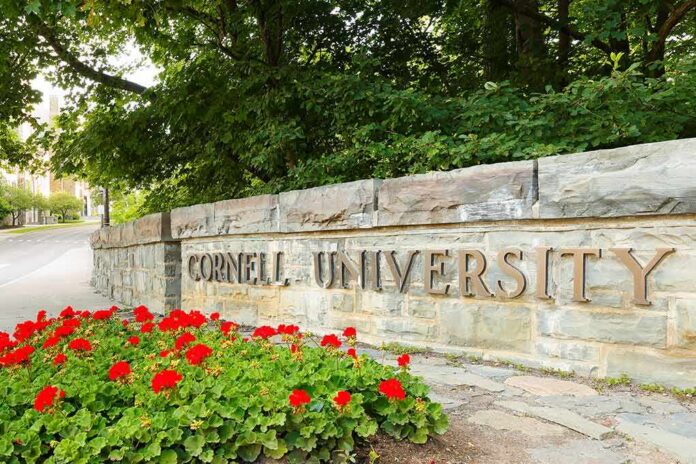
A 101-page lawsuit alleging drugging and group sexual assault at Cornell pushed prosecutors to reopen a case they once set aside.
Story Snapshot
- A former student filed a detailed civil complaint naming seven Cornell fraternity members.
- Tompkins County prosecutors reopened the criminal review and may seek a grand jury.
- Cornell says it investigated under policy and kept the Chi Phi chapter barred from campus.
- Defense statements flatly deny the claims and say documents will clear the accused.
What the New Lawsuit Alleges and Why It Matters
A civil complaint filed in New York County Supreme Court alleges a former Cornell student was drugged and sexually assaulted for hours at the Chi Phi house in October 2024. The filing spans 101 pages, names seven students, and cites pressure to take ketamine before assaults occurred, according to outlet summaries of the suit. No criminal convictions exist. Civil filings carry a lower burden of proof than criminal charges and often precede deeper evidence review.
The complaint reportedly names specific students and details roles during the night, including two men accused of pushing drugs and initiating the attack. The reported names include Matthew Ingalls, Johnathan Newell, Winston Lee, Gillio Lopes, Diego Sarabia, Scott Norris, and Scott Kretzschmar, per the lawsuit summaries. The suit seeks accountability from the students, the fraternity, and the university. The records provided to the public remain partial, with exhibits like messages not yet released in full.
Prosecutors Reopen a Case They Once Declined
Tompkins County District Attorney Matthew Van Houten reopened the criminal review after the civil filing and said he is considering presenting the matter to a grand jury, with the plaintiff’s cooperation. He said the new allegations differ “dramatically” from the woman’s 2024 account to police, which did not include claims of drugging or lack of consent, a gap that will likely shape how evidence is weighed in any grand jury step. No charges have been filed as of the cited reporting.
Cornell University said its Office of Civil Rights and its Office of Student Conduct and Community Standards investigated and adjudicated the allegations under policy. Cornell also confirmed the Xi chapter of Chi Phi remains barred from campus. The school cited federal student privacy rules in withholding discipline details, leaving the public without a clear map from findings to specific sanctions, which can cloud public understanding of what the school actually proved.
Defense Denials and the Evidence Fight Ahead
An attorney for defendant Scott Kretzschmar said the incident “did not happen” and claimed the defense has documents, third-party statements, and scientific evidence that will refute the claims. He added that his client never touched the plaintiff in any way. Defendant Scott Norris denied sexual activity or drug use and said he was not found responsible for those acts under Cornell’s process, though he acknowledged sending a message referenced in the complaint. These denials preview a hard evidentiary clash.
Cornell Chi Phi Case Reopened: Tompkins County DA Van Houten to Take Rape Allegations Against 7 Fraternity Members to Grand Jury, Says Lawsuit Differs "Dramatically" From 2024 Statement, as Defendant Matthew Ingalls Is Reportedly Firedhttps://t.co/yR2uBCAcEb pic.twitter.com/hqW8jj4mHJ
— Amalia Maxwell (@AmaliaMaxw965) September 28, 2026
Media reports mention a Snapchat screenshot and explicit chat language, but the underlying images and metadata have not been made public in the cited materials. Without those exhibits, the timing and authenticity of messages cannot be independently reviewed from open sources. Prosecutors’ next steps, including any grand jury move, and civil discovery—depositions, device data, and toxicology—will be key in testing each side’s claims. Until then, the public record remains incomplete.
Why This Case Hits a Nerve on Campus Process and Fairness
High-profile campus cases often turn on process: who is heard, what evidence is shown, and whether institutions act fairly. Studies show these disputes commonly move through civil courts, where universities face Title Nine and negligence claims, while respondents also sue over due process and bias. The Cornell matter fits this pattern: strong allegations, a reopened criminal review, a chapter still barred from campus, and sharp denials from defense counsel—yet limited public evidence so far to settle core facts.
What Readers Should Watch Next
Watch for release of the full complaint and exhibits, any grand jury action, and whether police records or toxicology emerge. Those steps could either confirm the new claims or support defense denials. For now, the record shows a serious civil filing, a university that took policy action, and prosecutors who changed course after seeing new material. Precision matters. Facts, not social-media storms, should drive outcomes and protect due process for all involved.
Sources:
cornellsun.com, lawcommentary.com, cbsnews.com, yahoo.com, indiatoday.in