

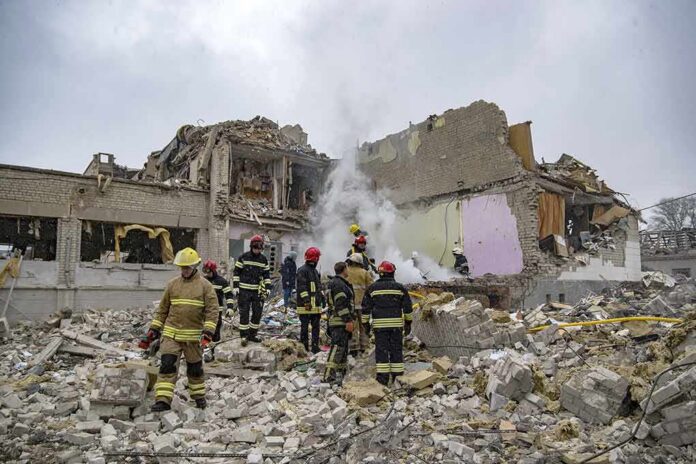
Russian drones struck Kyiv overnight, injuring four people and damaging homes and businesses, local authorities said.
Story Snapshot
- Russian overnight attack injured at least four people in Kyiv, officials said.
- Strikes hit several districts and damaged residential and commercial buildings.
- The attack fits a wider pattern of Russian strikes on cities and civilian sites.
- Ukraine faces repeated night raids that keep families on edge and services stretched.
Overnight Strikes Hit Kyiv Neighborhoods
Local officials said Russian drones hit several districts of Kyiv overnight into Saturday, injuring four people and damaging residential and office buildings, a warehouse, and a shopping center. Emergency crews worked through the night to put out fires and clear debris. First responders evacuated residents from damaged apartments as air-raid alerts sounded. City workers assessed broken windows, torn facades, and scattered shrapnel. Authorities warned of possible delayed hazards from unexploded parts and asked residents to avoid cordoned areas.
Officials reported that blast waves damaged storefronts and offices on busy streets. Apartment blocks lost power and water in some stairwells as utility teams isolated lines. Firefighters faced fuel-fed blazes in storage areas. The city’s transit routes were rerouted around rubble. Crews moved fast to reopen lanes before the morning rush. Hospitals treated cuts, burns, and shock. Police documented impact points and collected fragments for analysis. The city government promised repair aid for affected families and small businesses.
Pattern of Repeated Attacks on Civilian Areas
The strikes match a long pattern of Russia’s air war against Ukraine, where drones and missiles often hit homes and other civilian sites across many regions. Analysts tracking the conflict have recorded thousands of such incidents over recent years, with civilian infrastructure suffering frequent damage. Reports describe waves of long-range drones paired at times with cruise or ballistic missiles to strain defenses. Kyiv has endured night raids followed by daytime disruptions, leaving residents tired and anxious. This cycle keeps emergency services on constant alert.
Data from conflict monitors point to recurring targets that include housing, energy networks, schools, and clinics. These hits do more than break windows. They cut power and heat, slow transit, and close shops. Families shelter in bathrooms or basements, waiting for the all-clear. Seniors and children feel the strain most. City officials balance fast repairs with safety checks. Each strike leaves a to-do list for carpenters, glaziers, and line crews. The steady damage drags on local budgets and delays long-term rebuilding plans.
Why This Matters for America and Our Allies
Continued strikes on Kyiv show how modern drone warfare reaches deep into cities and tests civil defense. This matters for the United States and NATO partners who face rising drone threats at home and abroad. Local police, fire, and power crews become the frontline. They need gear, training, and clear plans. Secure borders, strong energy systems, and smart air defenses protect families and businesses. Americans expect government to focus on safety, not bloated programs that ignore real risks to critical infrastructure.
President Trump’s team has pressed allies to carry their share and to tighten export controls on parts that feed drone production. Clear goals, audits, and limits on spending help avoid waste while keeping pressure on aggressors. Sanctions that actually bite, combined with energy policies that lower costs and build resilience, make our country stronger. That approach respects taxpayer money and national security. It also signals that attacks on civilians are not “cost-free.” Deterrence works best when budgets are honest and defenses are ready.
Kyiv’s Recovery Push and Next Steps
Kyiv’s crews began repairs at first light, boarding windows and checking gas lines. Utility teams replaced damaged cables and inspected transformers. Shop owners swept glass and covered displays. Residents documented losses for claims. City leaders urged calm and reminded people to stock basic supplies and heed alerts. Investigators reviewed radar tracks and debris to refine defenses for the next wave. Officials said casualty numbers could change as assessments continue and more residents seek medical help.
🇷🇺 🇺🇦 Russia launches 173 drones overnight. Two women killed in Zaporizhzhia
Russia attacked Ukraine overnight into Saturday with 173 Shahed-type attack drones, Gerbera drones, and Parodiya decoys, including more than 50 jet-powered Shaheds, Ukraine's Air Force said. Launches…
— The Tectonic (@thetect0nic) September 26, 2026
Emergency managers asked volunteers to support shelters and deliver blankets, water, and hygiene kits. Churches and civic groups opened halls for families who cannot return home yet. The city planned targeted aid for seniors and people with disabilities. Repair teams prioritized hospitals, schools, and power nodes. The response reflects a grim routine after repeated strikes. Still, each night that passes without large new damage offers a chance to restock parts, rotate crews, and learn lessons that can save lives the next time alarms sound.