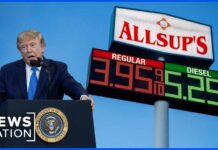

ExxonMobil’s profits more than doubled to $14.5 billion in the second quarter, fueled by an oil price spike tied to the U.S.-Israeli war with Iran, a fact that will almost certainly reignite the left’s push for a windfall profits tax on American energy companies.
Quick Take
- ExxonMobil posted a second-quarter 2026 profit of $14.5 billion, more than double last year’s $7.1 billion.
- Revenue jumped 42% to $116 billion as oil prices spiked during the U.S.-Israeli war with Iran.
- Rival Chevron saw its net profit soar from $2.5 billion to $12 billion in the same quarter.
- Despite the record haul, Exxon still fell short of Wall Street’s profit forecasts.
- Exxon says war-related disruptions actually trimmed its windfall by roughly $1 billion.
Oil Prices Spike as Middle East War Rattles Markets
ExxonMobil warned investors on July 7 that its second-quarter earnings could jump by about $5 billion compared to the prior quarter. The reason was simple: oil prices spiked during the U.S.-Israeli war with Iran. That warning proved accurate. By the end of July, Exxon confirmed second-quarter earnings of $14.5 billion, or $3.48 per share, with adjusted earnings hitting $14.7 billion.
That total marked the company’s biggest quarterly profit in four years and more than doubled the $7.1 billion Exxon earned in the same quarter last year. Revenue climbed 42% year-over-year to $116 billion, driven largely by the same geopolitical shock that has kept energy markets on edge since fighting broke out in the Middle East.
Refining Margins Add Fuel to the Profit Surge
Higher crude prices were only part of the story. Exxon also pointed to stronger refining margins as a major driver of its earnings jump, saying improved refining performance added billions on top of the crude price gains. War-related disruptions to supply chains and operations, however, cut into that windfall by an estimated $1 billion, showing the volatility that comes with operating in a war zone.
These numbers matter because they show energy profits are not manufactured out of thin air. They track real-world supply shocks. When a shooting war breaks out near the world’s most important oil chokepoints, prices move, and companies that produce and refine oil see the effects on their bottom line almost immediately.
Chevron Rides the Same Wave
Exxon was not alone. Chevron reported its own blowout quarter on the same day, with net profit soaring from $2.5 billion a year earlier to $12 billion. Both companies pointed to the same cause: rising oil prices tied directly to the ongoing conflict involving Iran, not domestic drilling policy or any change in how American energy firms do business.
Wall Street Wanted More
Even with a four-year high in quarterly profit, Exxon still missed Wall Street’s expectations. The company posted adjusted earnings per share of $3.52, below the analyst consensus of $3.60. That gap shows investors had priced in even bigger gains from the oil price spike than Exxon actually delivered.
JUST IN: ExxonMobil and Chevron report surging Q2 profits driven by rising oil prices from the Iran war, Chevron's net income soars nearly 400% to $12 billion, while Exxon's profit more than doubles to $14.5 billion.
— HIT.com (@HIT) July 31, 2026
The mixed results underline a simple truth conservatives have argued for years: energy profits swing with global events, not corporate scheming. Exxon’s own filings show gains from crude prices, losses from war disruptions, and swings in refining margins all hitting the ledger in the same quarter, a far more complicated picture than a simple “greedy oil company” narrative.
Left’s Windfall Tax Talk Ignores Basic Economics
Every time oil companies post strong earnings, some on the left demand a windfall profits tax, treating market-driven gains as if they were theft. But Exxon’s own numbers show the company absorbed real losses from war disruptions even as prices rose elsewhere. Punishing American energy producers for geopolitical events overseas would only raise costs and discourage the domestic production conservatives have long championed.
President Trump’s administration has pushed to expand American energy output and reduce reliance on unstable foreign supply chains. Quarters like this one show why that strategy matters. When war overseas can swing gas prices and corporate earnings by billions of dollars in a matter of weeks, American energy independence stops being a slogan and becomes a matter of national and economic security.
Sources:
insiderpaper.com, reuters.com, finviz.com, nasdaq.com, finance.yahoo.com