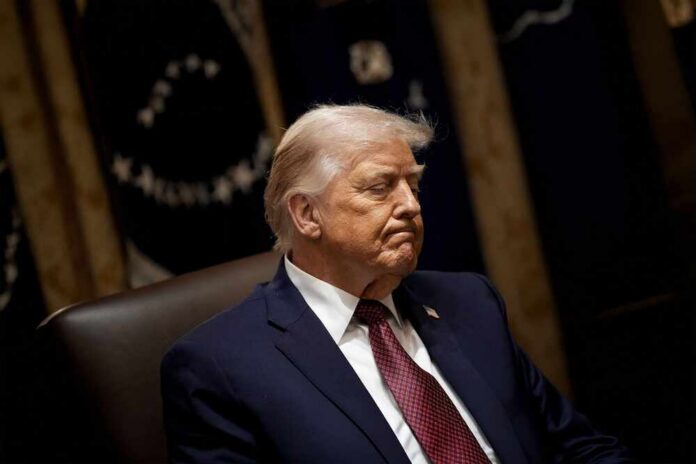
Israeli intelligence warned Washington of a fresh Iranian plan to assassinate President Trump, prompting U.S. security moves that show the threat is being taken seriously.
Story Highlights
- Israel shared new intelligence on an Iranian plot to kill President Trump.
- Four U.S. officials said Trump’s aircraft was swapped during his Turkey trip for safety reasons.
- Trump said he is “number one on the kill list for Iran” aboard Air Force One.
- Iranian leaders deny any plot, but past U.S. cases show Iran-linked schemes on U.S. soil.
Israel’s Warning And What It Means For U.S. Security
Israeli officials shared new intelligence with the United States that Iran is planning to assassinate President Trump, according to reporting confirmed by multiple U.S. sources. The alert reached Washington as regional tensions stayed high and Iran’s leaders faced internal turmoil. U.S. security teams responded by reviewing travel plans and procedures. The report did not include public specifics on timing, methods, or targets. That lack of detail leaves questions, but the core warning pushed U.S. planners to act with caution.
Four U.S. officials said the Secret Service and security leaders swapped Trump’s aircraft during his Turkey visit due to safety concerns tied to the newer plane’s capabilities. The change signaled that the government is treating the threat as credible enough to adjust logistics. Officials did not publish the technical reasons. The move matches prior security practice when a threat picture shifts. While no public evidence ties the plot to a specific aircraft attack, the caution points to heightened risk management.
Trump’s Response And Iran’s Repeated Targeting Claims
President Trump told reporters aboard Air Force One that he is “number one on the kill list for Iran,” reflecting his view of the danger and the regime’s intent. His remark followed years of threats from Tehran’s leaders and their media arms. The combination of Israeli intelligence and Trump’s statement underscored a real security concern. U.S. agencies have warned before about Iranian plots and cyber intrusions aimed at high-profile Americans during the 2024 campaign cycle. These warnings formed part of a pattern that officials track closely.
U.S. Justice Department records show Iran-linked actors have pursued murder-for-hire schemes inside the United States. Prosecutors charged an Islamic Revolutionary Guard Corps asset and two associates in a plot that included political targets, adding weight to the threat pattern that security teams plan against. These cases matter because they show method and reach. They also show the regime and its partners often use cut-outs, cash, and foreign recruiters. That history shapes today’s protective posture around the President and other officials.
What We Know, What We Do Not, And Why It Matters
Reporters have not seen the underlying Israeli intelligence, and U.S. officials have not released operational details to the public. No specific method, timing, or hit team has been named in open records tied to this new plot report. Claims about a special “Mukhtar” unit and outside partners remain unverified in public sources. The aircraft swap link to the plot is also not officially confirmed by the White House or the Secret Service. Those gaps mean parts of the story stay uncertain for now.
Israel recently shared intelligence with the U.S. warning of a plot from Iran to assassinate Donald Trump amid high tensions in the Middle East.https://t.co/uiRB3LNT6c pic.twitter.com/5AfMLY9tPE
— KHON2 News (@KHONnews) July 10, 2026
Iran’s president and diplomats deny any plan to kill Trump and call the accusations false. They have offered broad denials rather than point-by-point responses to past U.S. cases or to the new Israeli report. Denials alone do not erase the public record of Iran-linked plots and convictions in U.S. courts. Americans should demand evidence when possible, but also expect agencies to protect the President first. When life is at stake, prudence comes before public release of sensitive intelligence.
How The Trump Administration Should Move Forward
Security teams should keep pressure on every known pathway Iran has used in the past. That means tracking foreign recruiters, stopping cash transfers, and hardening travel plans. The administration should tighten sanctions on any front company or operative linked to prior plots. Congress should support fast declassification of non-sensitive threat details to inform the public without risking sources. Clear facts build trust, deter enemies, and help citizens understand why security steps, like aircraft changes, are needed.
Allies matter in this fight. Israel’s warning helped prompt action and may help save lives. The United States should press partners to share timely signals, human reporting, and travel threat data. At the same time, Washington should insist on high standards of verification. That balance respects American strength and common sense. It keeps focus on what works: stop the killers upstream, shield our leaders, and punish anyone who tries to export terror to our soil.
Bottom Line For Readers
Israel says Iran is plotting to kill President Trump, and U.S. teams are acting like the threat is real. Trump says Iran wants him dead, and recent history backs the risk picture, even as Tehran denies it. Some details remain classified or unclear. But the mission is clear: defend the President, protect American sovereignty, and refuse to let a hostile regime silence the voice of the voters who chose their leader.
Sources:
nytimes.com, youtube.com, facebook.com, apnews.com