
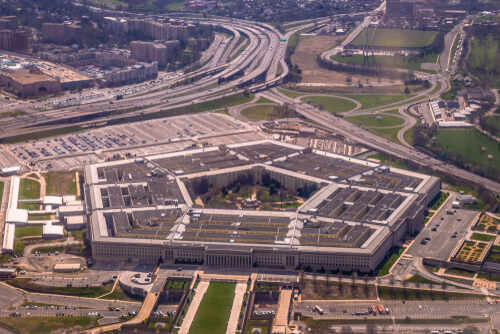
A quarter century after American Airlines Flight 77 slammed into the Pentagon, the government’s carefully polished story still leaves key questions about transparency and truth unanswered.
Story Snapshot
- The Pentagon’s official 9/11 narrative is concise, consistent—and thin on publicly available evidence.
- Memorial pages confirm Flight 77, hijackers, and 184 dead, but not the underlying investigative record.
- Claims about hijackers reprogramming the autopilot are asserted without visible technical sourcing.
- Lack of released forensic files fuels distrust and lets conspiracy theories compete with the facts.
What The Pentagon Says Happened On 9/11
Official Pentagon and Department of War memorial pages present the 9/11 attack as settled history: al-Qaeda terrorists hijacked four commercial planes, including American Airlines Flight 77, which struck the Pentagon at 9:37 a.m., killing 184 people between the aircraft and the building.[1][2] Those pages agree that 125 were killed inside the Pentagon and 59 passengers and crew died aboard Flight 77, excluding the hijackers.[1][2] The language is definitive, with no hint the basic facts remain in dispute.
Memorial material hosted by the Pentagon emphasizes solemn remembrance, not investigative nuance.[2] The National 9/11 Pentagon Memorial is described as the first national memorial dedicated to honoring the 184 people lost at the Pentagon, capturing the exact moment of impact at 9:37 a.m.[2] These commemorative pages highlight sacrifice, heroism, and national resilience, reinforcing a coherent narrative: terrorists weaponized Flight 77, slammed it into the Pentagon, and America responded with unity and strength.[1][2] For many grieving families, that clarity matters deeply.
What The Pentagon Does Not Show The Public
Missing from the material most Americans see are the actual investigative underpinnings: radar traces, flight data, chain-of-custody logs, detailed debris inventories, and full structural engineering analyses of the impact and fire.[1][2] The public pages say, “investigators later confirmed,” but they do not link to the reports that supposedly did the confirming.[1] That is not the same as saying those records do not exist, yet from the citizen’s side of the screen, the result is a trust gap that critics have exploited for years.
Pentagon memorial resources also assert that hijackers reprogrammed the aircraft’s autopilot to aim for Washington, District of Columbia, likely the United States Capitol where Congress was in session.[1] That is a very specific technical claim, but the provided public-facing material does not show the data, cockpit evidence, or analytical work used to reach that conclusion.[1] For a conservative audience accustomed to demanding receipts from unelected bureaucrats, being told to “just trust” an unshown technical record understandably rings hollow, particularly after decades of intelligence and security failures.
Why This Matters For Conservatives In 2026
When government institutions reduce complex events to tidy paragraphs, Americans who value limited government and accountability see a familiar pattern: narrative first, documentation later—if ever.[1][2] Today’s information environment makes this worse. Search results around the Pentagon are crowded with unrelated material, from newer aircraft incidents to bus crashes and local traffic accidents near the complex, which further bury whatever primary records do exist. Citizens get memorial speeches and press soundbites, not the full investigative paper trail they would need to independently verify claims.
For a base that watched bureaucrats push “Russia collusion,” censor dissenting views on pandemics, and weaponize agencies against parents at school board meetings, skepticism is not fringe—it is earned. Yet the research here does not contain evidence contradicting the central account that Flight 77 hit the Pentagon and killed 184 people.[1][2] The numbers on official sites are internally consistent, and the counter-arguments presented focus on omissions and transparency, not on alternative forensic proof of a different event.[1][2] That distinction matters if conservatives want both truth and credibility.
Demanding Transparency Without Abandoning Facts
Conservatives can hold two positions at once: first, that terrorists attacked us on 9/11 using Flight 77, and second, that the federal government still owes the public a complete, easily accessible investigative record.[1][2] That means pushing for declassification and release of crash files, including radar data, witness interviews, technical flight analysis, chain-of-custody evidence records, and engineering studies of the building damage. Doing so would not weaken America; it would strengthen trust in legitimate conclusions and expose any corners where officials cut truth for convenience.
Calls for greater disclosure should now land on a different White House. With President Trump back in office promising to drain what is left of the swamp, conservatives have an opportunity to insist that national security agencies stop hiding behind memorial pages and start opening archives. Releasing as much of the 9/11 Pentagon crash record as possible—short of legitimately sensitive operational details—would demonstrate that this administration stands for adults getting the facts, not propaganda, and would undercut both wild conspiracy theories and complacent bureaucratic secrecy.
Sources:
[1] Web – 9/11 at the Pentagon
[2] Web – The National 9/11 Pentagon Memorial – Department of War