

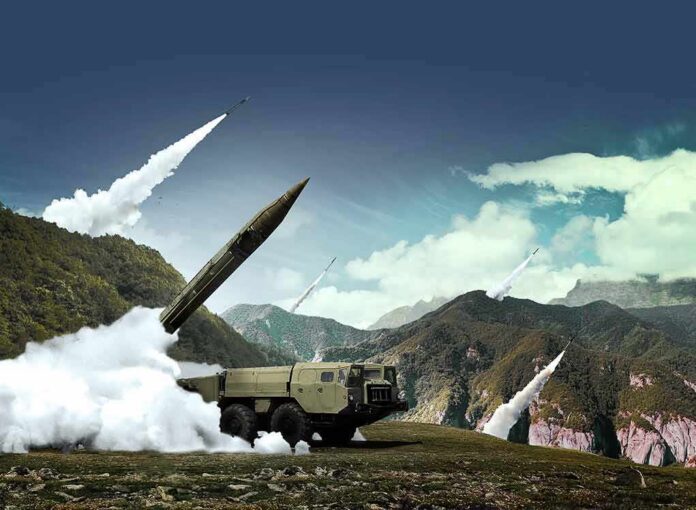
Iran’s missile force has taken hard hits, but it still can fire enough to keep the region on edge.
Quick Take
- U.S. and Israeli strikes damaged missile factories, launch sites, and support systems across Iran.
- Reporting says Iran’s missile launches fell sharply, with some assessments citing a drop of about 90 percent.
- Even after those losses, intelligence and expert reports say Iran kept meaningful launch capacity.
- The fight now centers on how much real firepower Iran still has, not whether it was weakened.
Missile damage was broad, but not total
U.S. and Israeli strikes hit four major ballistic missile production facilities and at least 29 launch sites in the first four weeks of the campaign, according to a Washington Post investigation. Other reporting says the damage also reached missile fuel and motor production sites that sit at the heart of Iran’s missile industry. That matters because launchers can be replaced only if the supply chain stays alive. The strikes made that harder.
Still, the damage did not erase Iran’s ability to respond. One analysis said Iran may have lost roughly a third to half of its ballistic missile arsenal and about half of its launchers, while U.S. intelligence sources reported that around half of the launchers remained operational. The picture is mixed. Iran took serious losses, but it did not become helpless, and that distinction shapes every new clash.
Launch rates dropped as pressure mounted
Several reports say Iran’s ballistic missile fire rate fell by about 90 percent after the conflict began. That drop shows real strain on Iran’s attack system. It also suggests the U.S.-Israeli campaign disrupted more than just one or two launch pads. The strikes appear to have slowed Iran’s pace, cut into its stockpile, and forced its forces to fire less often and with more caution.
Yet a lower launch rate does not mean the threat disappeared. Analysts note that mobile launchers, underground shelters, and damaged but not destroyed stockpiles can still support later attacks. That is why some reports describe Iran’s missile force as “degraded” rather than eliminated. For readers watching this from the United States, that is the key point: a weaker enemy is still dangerous when it keeps enough weapons to strike back.
What the latest assessments mean for U.S. security
For the Trump administration, the main question is whether continued strikes can keep Iran boxed in without widening the war. Reporting from The Wall Street Journal, CNN, and other outlets says Iran’s missile manufacturing and launcher network suffered heavy damage, but also that parts of the system remain usable. That leaves U.S. forces, allies, and shipping lanes in a tough spot. Iran has less reach than before, but it still has reach.
Tensions in the Middle East have escalated after Iran's Revolutionary Guards launched ballistic missiles at US-operated air bases in Jordan, killing two American service members. This is the latest in a series of attacks following the US's downing of an Iranian drone. The strike…
— Ben Ben Ben (@BenRustC) July 22, 2026
That reality helps explain why analysts keep using careful language. Some say Iran’s capability was “severely degraded,” while others say it remains “potent” enough to cause harm. Both can be true at once. Iran can be badly damaged and still dangerous. For Americans who want a strong defense and fewer overseas surprises, the lesson is simple: missile strikes can buy time, but they do not always end the threat.
Sources:
realcleardefense.com, understandingwar.org, washingtonpost.com, wsj.com, fdd.org, aljazeera.com, thesoufancenter.org, cnn.com, youtube.com