
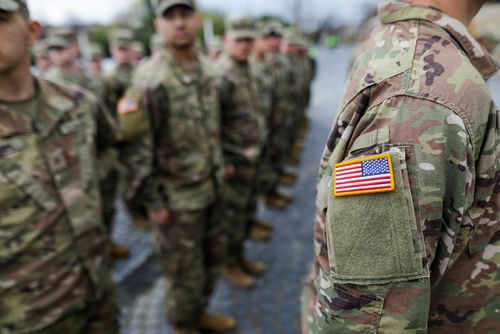
With 50,000 American troops now shifting from “deterrence” to “active combat” against Iran, the biggest question is whether Washington can finish the job without slipping into another open-ended Middle East commitment.
Story Snapshot
- CENTCOM Commander Adm. Brad Cooper II issued a letter to roughly 50,000 U.S. troops tied to Operation Epic Fury, calling for “relentless lethality” and discipline as operations intensify.
- The letter surfaced publicly on March 2, 2026, after Washington Post reporter Dan Lamothe shared it on X, and it aligned with a separate message from Secretary of War Pete Hegseth.
- The combat phase follows U.S.-Israel strikes on Feb. 28 targeting Iranian nuclear and missile infrastructure, with Iran retaliating against regional bases and civilian areas.
- Negotiations that began in 2025 collapsed after disputes over dismantling nuclear sites and Iran’s proxy network, leaving military pressure as the dominant lever.
Cooper’s Letter Signals a Clear Shift From Posture to Combat
Adm. Brad Cooper II’s message to forces under U.S. Central Command framed the moment as a transition from deterrence to direct action in Operation Epic Fury. The letter emphasized operational lethality, professionalism, and keeping faith with fellow service members while functioning under chaos. Cooper also cast the deployed force as both “shield” and “sharpest sword,” language that underscores the administration’s expectation of decisive results rather than symbolic deployments.
Secretary of War Pete Hegseth echoed that theme in his own message released around the same time, portraying the operation as a major historical pivot and urging troops to tune out domestic “noise.” Whatever one thinks of the rhetoric, the practical takeaway is straightforward: senior civilian and military leadership are presenting a unified chain of command, communicating urgency, and preparing the public for sustained action rather than a one-night strike.
How 2025 Talks Collapsed Into 2026 Airstrikes and Retaliation
The immediate military escalation followed a long slide from diplomacy into coercion. Negotiations for a nuclear-related agreement began in April 2025 while the U.S. built up forces in the region, reaching a scale described as the largest American air presence there since the 2003 Iraq invasion. By late May 2025, the IAEA reported Iran had amassed record levels of highly enriched uranium, and June brought embassy evacuations and formal findings that Iran was in breach.
From mid-2025 onward, reporting summarized demands that Iran dismantle key nuclear facilities—commonly cited locations included Natanz, Fordow, and Isfahan—along with a broader insistence that Tehran rein in proxy forces. As talks stalled, President Trump publicly combined diplomacy with threats of strikes, while Iran warned it could target U.S. bases. That sequence matters because it shows why the administration argues that deterrence and negotiation had reached their limits before the latest strikes began.
Operation Epic Fury and the Risk of Wider Regional Blowback
On Feb. 28, 2026, the U.S. launched Operation Epic Fury alongside Israel’s Operation Roaring Lion, with reporting describing strikes on Tehran, IRGC-related targets, and nuclear and missile sites. Iran responded under the name “True Promise 4,” with accounts alleging attacks affecting U.S. bases and locations across the Gulf region, including civilian areas in places like Bahrain and the UAE. Regional disruption followed, including airport interruptions and airspace restrictions.
The Constitutional and Strategic Tension: Decisive Action vs. Open-Ended War
The research also points to a debate conservatives should not ignore: how major combat operations interact with Congress’s constitutional war powers. Sen. Tom Cotton’s remarks, as referenced in the reporting, lean on a long precedent of presidents conducting military operations without formal declarations of war. That history is real, but it does not automatically settle the prudence question—especially for voters who remember decades of costly, unclear missions sold as limited and temporary.
So far, publicly available details remain incomplete on key measures Americans deserve to know: casualty figures, the precise extent of damage to Iran’s nuclear and missile infrastructure, and whether “active combat” will narrow quickly to specific targets or expand through proxy responses. What is clear is that the administration is aligning messaging—from the White House down through Hegseth and Cooper—around decisive pressure on the Iranian regime, while U.S. families watch a large deployment enter a more dangerous phase.
Sources:
CENTCOM Commander Stirs the Warrior Ethos With Letter to 50,000 U.S. Troops Involved in Iran Ops
2025–2026 Iran–United States negotiations
Dawn Dispatch: March 3rd, 2026