
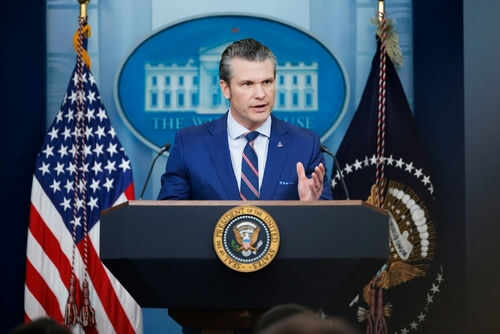
Defense Secretary Pete Hegseth declared on national television that while no U.S. ground troops are currently in Iran, the Trump administration stands ready to escalate operations “as far as we need” to neutralize Tehran’s nuclear ambitions and regional threats—a bold strategic stance that contrasts sharply with decades of failed diplomacy.
Story Snapshot
- Hegseth confirms no U.S. boots on the ground in Iran during ongoing military campaign but warns of unlimited escalation readiness
- Trump administration targets Iranian missiles, drones, naval forces, and nuclear program through operations like “Midnight Hammer” and “Epic Fury”
- Russia reportedly shares U.S. military intelligence with Iran, prompting strong warnings of consequences for external interference
- Strategy emphasizes precision strikes over nation-building, rejecting Biden-era weakness and endless occupation policies
Trump’s Decisive Iran Strategy Takes Shape
Defense Secretary Pete Hegseth outlined the Trump administration’s approach to Iran during a March 6, 2026, 60 Minutes interview, confirming an active military campaign without ground forces deployed. President Trump has authorized operations targeting Iran’s ballistic missiles, drone capabilities, naval assets, and nuclear infrastructure through named missions including “Epic Fury” and “Midnight Hammer.” This measured escalation follows months of defensive buildup and aims to degrade Tehran’s power projection capabilities threatening U.S. allies. Hegseth emphasized Trump personally sets operational tempo and objectives, contrasting with previous administrations’ indecisiveness regarding Iranian aggression.
The Defense Secretary made clear the administration reserves all options for achieving strategic objectives. “We’re willing to go as far as we need to go,” Hegseth stated, signaling unlimited commitment to eliminating Iranian threats without committing to prolonged occupation. This approach directly addresses conservative frustrations with endless Middle Eastern conflicts that drained American resources without decisive outcomes. Unlike the Biden administration’s tentative responses to Iranian provocations, Trump’s strategy prioritizes American interests and ally protection through overwhelming force applied with surgical precision, avoiding the nation-building quagmires that characterized Iraq and Afghanistan.
Russian Interference Draws Strong Warning
Hegseth confronted reports that Russia has been sharing U.S. military position intelligence with Iranian forces during the ongoing campaign. He dismissed concerns about operational security risks, asserting American forces possess awareness and mitigation capabilities superior to adversary intelligence efforts. “We’re tracking everything… anything that shouldn’t be happening is being confronted strongly,” the Defense Secretary warned. This represents a significant escalation in U.S.-Russia tensions, as Moscow’s support for Tehran directly undermines American military operations. Hegseth indicated Trump may leverage personal relationships with world leaders, including Vladimir Putin, to pressure Russia into curtailing intelligence cooperation with Iran.
The Russian intelligence sharing underscores a troubling axis between Moscow and Tehran that threatens American servicemembers and strategic objectives. However, Hegseth’s confidence reflects Trump’s strength-based foreign policy that holds adversaries accountable rather than appeasing them through weak diplomatic gestures. CBS national security analyst Aaron MacLean noted the administration’s resolve sends clear messages to both Iran and its supporters. This stands in stark contrast to the Obama-Biden approach that sent pallets of cash to Tehran while allowing Iranian influence to expand unchecked across the Middle East, fueling regional instability and threatening Israel’s existence.
Rejecting Endless Wars While Maintaining Resolve
Hegseth explicitly differentiated Trump’s Iran strategy from previous conflicts, stating the administration will not deploy “200,000 people for 20 years” as occurred in Iraq and Afghanistan. The current campaign focuses on degrading specific Iranian capabilities through airpower and precision strikes rather than occupying territory or attempting regime change through ground invasions. This limited objectives approach aligns with conservative principles of protecting American interests without overextending military commitments or engaging in futile nation-building. U.S. Central Command manages simultaneous offensive operations and capability assessments, with particular focus on neutralizing Iran’s long-range strike systems that threaten regional stability and international shipping lanes.
The strategy reflects lessons learned from two decades of Middle Eastern conflicts that conservatives repeatedly warned against. Trump’s willingness to use decisive military force while avoiding permanent troop deployments demonstrates the prudent middle ground between isolationism and endless engagement. Operations like “Midnight Hammer” targeted Iranian nuclear facilities after Tehran rejected diplomatic overtures, showing strength rather than the weakness that characterized previous administrations’ tolerance of Iranian nuclear ambitions. This approach protects American sovereignty and allies without surrendering to globalist pressures for indefinite military commitments that drain national resources while producing minimal strategic gains for American security interests.
Sources:
CBS News: Hegseth says anyone helping Iran’s war efforts will be “confronted strongly”
AOL: Pete Hegseth appears to mock Iranians during 60 Minutes interview