

Mystery Drug Causes Unexpected Side Effects
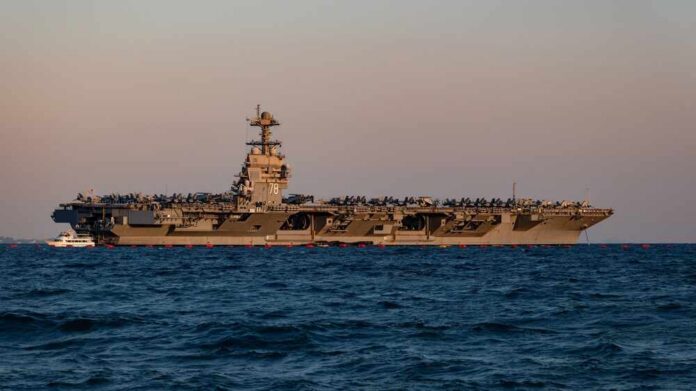
America’s most advanced aircraft carrier crew faces a psychological crisis as President Trump’s strategic redeployment pushes the USS Gerald R. Ford beyond 300 days at sea—a decision that showcases American resolve against Iran but risks breaking the sailors who defend our nation.
Story Snapshot
- USS Gerald R. Ford deployment extended to record-breaking 300+ days, surpassing the post-Vietnam record of 294 days amid escalating Iran tensions
- Approximately 5,000 sailors face severe mental health risks from prolonged separation, operational fatigue, and delayed homecoming to Norfolk families
- Trump administration prioritizes Middle East deterrence with dual-carrier presence, balancing national security needs against crew welfare concerns
- Navy leadership resists extension citing burnout risks and billions in delayed maintenance costs, exposing strain on America’s 11-carrier fleet
Record-Breaking Deployment Tests Crew Endurance
The USS Gerald R. Ford departed Norfolk, Virginia on June 24, 2025, for what sailors expected to be a standard deployment. After operating in European waters and supporting the January 2026 capture of Venezuelan dictator Nicolás Maduro in the Caribbean, the crew received unexpected orders on February 12, 2026. Trump administration officials redirected the nuclear-powered supercarrier to the Middle East to join USS Abraham Lincoln, responding to stalled Iran nuclear negotiations. This extension pushes the deployment beyond 300 days, eclipsing the USS Abraham Lincoln’s 294-day post-Vietnam record set in 2019-2020.
Mental Health Crisis Looms for 5,000 Sailors
Extended deployments create documented psychological strain on naval personnel separated from families for nearly a year. The Ford’s approximately 5,000 sailors face mounting fatigue from high-tempo operations across three geographic commands—NATO waters, Caribbean counter-narcotics missions, and now Middle East power projection. Admiral Daryl Caudle and Navy leadership have voiced strong resistance to deployment extensions, citing the human toll of prolonged separations. Previous extended deployments, including the Lincoln’s 2020 record stint, resulted in documented crew burnout, increased medical incidents, and retention challenges that ripple through fleet readiness for years afterward.
Strategic Necessity Versus Operational Sustainability
President Trump’s decision to surge two carrier strike groups to the Middle East demonstrates American commitment to regional allies and adversaries alike, particularly as Iran escalates provocations. The Ford brings F-35C stealth fighters, EA-18G Growler electronic warfare jets, and E-2D Hawkeye surveillance aircraft to form a formidable deterrent alongside the Lincoln’s strike group—creating the first dual-carrier Middle East presence since 2024. This projection of strength aligns with conservative principles of peace through strength and protecting American interests abroad. However, the operational reality exposes a concerning vulnerability: America’s 11-carrier fleet struggles to meet global demands without overextending platforms and personnel beyond sustainable limits.
Maintenance Delays Compound Long-Term Readiness Risks
The Ford’s delayed return from March to May 2026 postpones critical four-to-six-month shipyard maintenance, inflating costs into the billions and delaying technological testing of Ford-class systems still being refined. The carrier logged over 33,000 flight operations during its 2024 deployment, and this extended mission adds unprecedented wear on the Navy’s newest platform. These maintenance slips create cascading delays across the carrier fleet, potentially affecting USS George H.W. Bush and USS Theodore Roosevelt deployment schedules. Admiral Caudle’s warnings about sustainability reflect a broader concern: pushing our warriors and warships beyond design limits may win today’s standoff but mortgage tomorrow’s readiness—a gamble that threatens the very naval dominance conservatives champion as essential to American security.
Psychology Suggests Aircraft Carrier Crew of USS Gerald R. Ford Aircraft Carrier Could Suffer Mental Health Issues from Record Deploymenthttps://t.co/hCrB0UU59C
— 19FortyFive (@19_forty_five) February 22, 2026
As the Ford sails through the Mediterranean toward Israel, approximately 2,500 miles from its Middle East station, the crew’s sacrifice underscores both the strength of American resolve and the hidden costs of global leadership. Norfolk families await their sailors’ return while Iran watches America’s most powerful carrier demonstrate that freedom isn’t free—but the question remains whether we’re asking too much of those who answer the call.
Sources:
USS Gerald R. Ford Now in the Mediterranean Sea – USNI News
Supercarrier USS Gerald R. Ford Has Crossed Into the Mediterranean – The War Zone
Ford Carrier Strike Group Enters Mediterranean En Route to Middle East – Stars and Stripes