

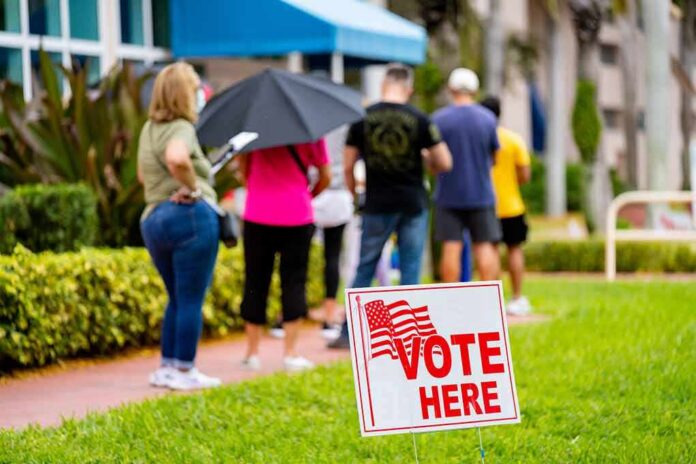
North Carolina recorded more than 4.2 million in-person early votes, setting a new state record and raising the stakes in a closely watched Senate race.
Story Highlights
- State officials report 4.2 million in-person early votes, topping the 2020 record.
- Opening day set a single-day turnout record with more than 353,000 voters.
- More than 2 million ballots were cast by October 24 as momentum built.
- Early voting’s share of total ballots has grown over several election cycles.
Record-Breaking Early Vote Sets Tone for High-Stakes Senate Battle
North Carolina’s State Board of Elections said more than 4.2 million people voted in person during the early voting period that ended November 2, eclipsing the previous record of more than 3.6 million set in 2020. Officials described steady lines and strong participation across urban and rural sites. The surge signals intense voter engagement before Election Day. Turnout of this size in a battleground state puts every campaign’s ground game under a spotlight, especially in a Senate race that could shape national policy direction.
Early voting began with a jolt. On the first day, more than 353,000 voters cast ballots at in-person sites, a new opening-day high for the state. That strong start carried into the following week. By October 24, preliminary data showed the state had already crossed 2 million total ballots cast, with most coming from in-person early voting. Local coverage tracked the climb as election officials confirmed the trend toward a new record heading into the final early-vote weekend.
What the Numbers Mean—and Do Not Mean—About Outcomes
High early turnout shows interest and organization, not a winner. Researchers who study election rules note that early voting can boost convenience without favoring one party in every cycle. Some studies find that making it easier to vote early can help Republican-leaning regular voters return their ballots sooner, while same-day registration tends to help Democrats more. Campaigns know this. Both sides work to “bank” reliable voters early, then focus on late deciders before polls close.
North Carolina’s pattern fits a longer shift toward voting before Election Day. State data show early voting has become a large share of total ballots over recent cycles, especially in presidential years. That growth reflects voter demand for predictable hours, shorter waits, and weekend options. It also reflects parties’ investment in turnout programs that help seniors, working parents, and rural voters cast ballots on schedules that fit real life. Convenience and strong rules can work together to lift honest participation.
Why Conservatives Should Pay Attention to Process and Integrity
Record volume puts pressure on systems. Counties must manage long lines, secure ballot transport, and accurate check-in records. The State Board posts turnout dashboards and method-by-method totals so the public can watch the process. Transparency helps build trust and keeps results clean. Strong chain-of-custody, voter roll maintenance, and clear rules for provisional ballots protect every lawful vote and block bad behavior. High turnout is healthy when the law and the process are clear and enforced the same for everyone.
In North Carolina during early voting, Black voters have had the highest percentage of turnout.
So far close to 40% of registered Black voters in NC have already voted before Tuesday in comparison to 27% in 2022. pic.twitter.com/cvmyeIahAu
— Popitics (@Popitics1) November 3, 2026
For voters who value limited government and the rule of law, participation is power. Early voting gives small businesses, military families, and church communities a way to plan and be heard. The record in-person early vote shows North Carolinians are engaged and expect leaders to secure borders, lower energy costs, and stop wasteful spending. With Election Day next, campaigns will fight for the final margins. The numbers prove one thing already: citizens are turning out to decide the course of the country.
Sources:
youtube.com, ncsbe.gov, wfdd.org, wbtv.com, papers.ssrn.com, academic.oup.com