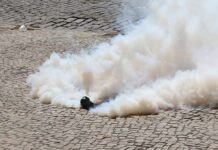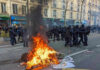

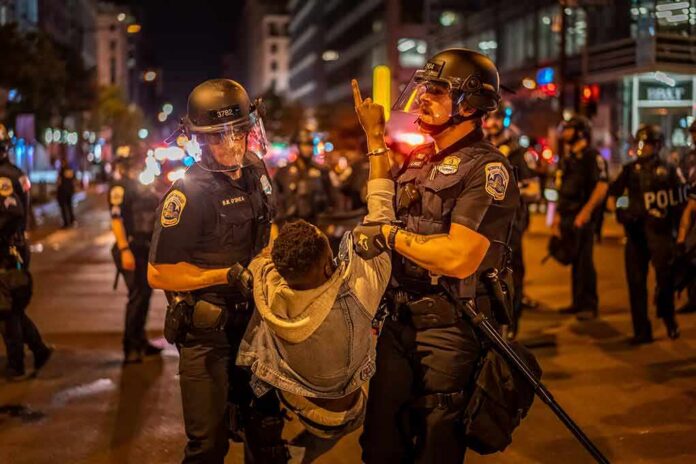
Masked youths smashed shops and battled police in Milan as prosecutors detailed “rare violence,” with dozens arrested on charges that included looting and aggravated resistance.
Story Snapshot
- Italian police detained 271 people; 32 arrests included many minors and foreign nationals.
- Prosecutors cited “destructive acts of rare violence” and serious criminal capacity.
- Reports described radical-left activists among the rioters and revolutionary slogans tied to looting.
- Italy moved on a security and youth crime decree after the clashes.
Police Actions and Arrest Figures From Milan’s Riots
Italian police reported a sweeping response after violent unrest in central Milan. Officers took 271 people to police headquarters, including 220 minors and 60 foreign nationals. Authorities made 32 arrests, with 23 minors and 13 foreign nationals among those accused. Allegations included aggravated resistance, vandalism, and looting. Fourteen officers were injured during the clashes, underscoring the level of force used by rioters against law enforcement. These figures show charges tied to specific acts, not mere presence at a march.
Prosecutors pushed for detention against several adults and minors as judges reviewed arrest validations. A later update said four adults remained in jail and one was placed under house arrest, on allegations that included devastation, looting, and aggravated resistance. These steps indicate courts found grounds to proceed while investigations continue. Officials framed the conduct as criminal and violent, not as protected speech or peaceful protest. That distinction will shape how Italy prosecutes the accused.
Prosecutors Describe “Rare Violence” and Tactics Used
The Lombardy Public Prosecutor’s Office issued stark language about what police faced. In filings, prosecutors cited an “absolute ease in improvising destructive acts of rare violence,” and said accused adults showed “significant criminal capacity” and a lack of self-control. Reports described youths in masks swarming businesses, breaking windows, and ransacking stores before dispersing. Such tactics point to rapid, coordinated strikes that complicate police response and maximize damage to local shops and neighborhoods.
Authorities and reporters also described direct clashes with officers, including thrown objects and street battles near the city center. One video shared during the unrest showed looted goods being handed to a homeless man with the caption “Proletarian expropriation in Milan”. That phrase echoes revolutionary rhetoric, and it aligns with reports of far-left activism at the scene. While investigations continue, the documented conduct goes well beyond a rally about prices or wages.
Ideological Elements and Reported Radical-Left Presence
Media accounts, echoing police summaries, reported that radical-left activists and students joined the clashes and looting. Police said members from organized radical-left groups linked to Milan social centers appeared among demonstrators. The “proletarian expropriation” caption linked to a looting video added an ideological frame to at least one incident. These elements suggest some political motive mixed with street-level opportunism. However, the reports do not name a single group directing the entire episode.
If it keeps going at this rate, we might, for (I think) the first time in history, be about to witness the first continent-wide youth revolt in Europe – a "European spring" of sorts.
The sheer number of countries where it's **already** happening is pretty overwhelming. I count… https://t.co/WEfcsdR3cu
— Arnaud Bertrand (@RnaudBertrand) October 21, 2026
The composition of those detained shows many minors and some foreign nationals, but it does not prove a single demographic led the violence. Of the 32 arrests, 13 were foreign nationals. The data describe age and nationality, not ethnicity, immigration generation, or leadership roles. That said, the heavy youth share and the presence of radical-left elements pair with the prosecutors’ description of planned, destructive actions. Italian leaders answered with policy steps and a security push as damage mounted.
Government Response and Public-Order Focus
Following the riots, Italy approved a security and youth crime decree aimed at tightening public order. The measure followed two days of reported clashes, shop attacks, and street disorder in Milan. Policymakers prioritized quicker consequences for violent acts, especially those involving minors. Officials also emphasized support for police who faced injuries and property destruction during the unrest. The decree signals a resolve to deter future copycat events and to restore peace for law-abiding residents and shopkeepers.
What This Means for Public Safety and the Rule of Law
Italian authorities framed the violence as criminal conduct wrapped in political slogans. Police and prosecutors focused on concrete acts: broken windows, looted stores, and assaults on officers. That focus reflects a core principle that should guide leaders everywhere, including here at home under President Trump’s administration: protect peaceful speech, punish crime. When masked mobs exploit a cause to smash and steal, families, small businesses, and the social fabric pay the price.
Sources:
lifesitenews.com, hungarianconservative.com, ynetnews.com, thegatewaypundit.com, ground.news