

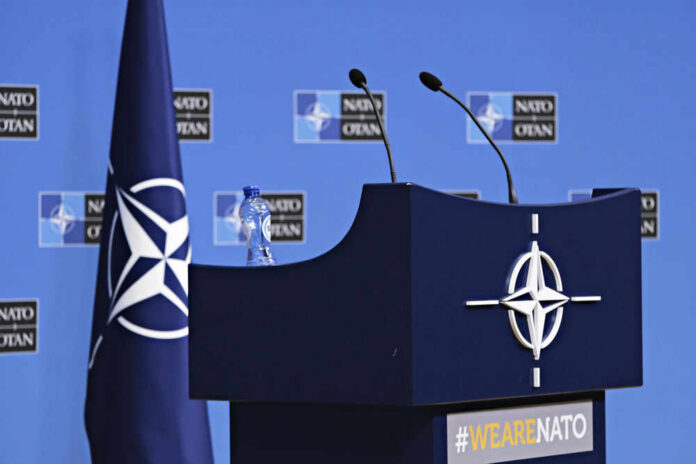
NATO is rushing to flatter President Trump because the alliance knows he is the one leader forcing Europe to pay up.
Quick Take
- NATO Secretary-General Mark Rutte met Trump at the White House before next month’s summit to ease tensions.[1]
- NATO says allies agreed in The Hague to spend 5% of gross domestic product on defense-related needs by 2035.[2]
- NATO also says all allies now meet or exceed the older 2% defense goal.[2]
- Trump’s pressure helped drive a 20% jump in European and Canadian defense spending in 2025.[2]
Rutte Tries to Calm Trump Before the Summit
Mark Rutte went to the White House on Wednesday and used praise to keep Trump engaged with NATO.[1] The visit came as the Pentagon reviews the U.S. military footprint in Europe and as Trump keeps pressing allies to spend more on defense.[1]
Rutte told Trump that most European allies have stood with the United States, while also admitting there have been isolated cases that disappointed him.[1] That language shows the basic NATO problem: the alliance wants U.S. protection, but many members still need a public push before they spend like serious allies.[1]
The 5% Goal Marks a Big Shift, But Questions Remain
NATO says leaders in The Hague agreed to invest 5% of gross domestic product yearly on core defense and security-related needs by 2035.[2] The alliance says at least 3.5% will go to core defense requirements and capability targets, while up to 1.5% can support infrastructure, resilience, and the defense industrial base.[2]
NATO also says all allies met or exceeded the older 2% goal in 2025, compared with only three allies in 2014.[2] The alliance says European allies and Canada raised defense spending by 20% from 2024, and more than 574 billion dollars was invested in defense at 2021 prices.[2] That is a real shift, but NATO still leaves open how each country will reach the new target.[2]
Trump Keeps the Pressure on Burden Sharing
Trump has long argued that the United States has carried too much of the NATO load, and the recent flare-up over Iran only sharpened that complaint.[1] He has also pushed the idea that allies should repay American security support with higher spending, which fits his wider argument for stronger borders, harder bargaining, and fewer free riders overseas.[1]
𝐍𝐀𝐓𝐎 𝐒𝐄𝐂𝐑𝐄𝐓𝐀𝐑𝐘 𝐆𝐄𝐍𝐄𝐑𝐀𝐋: 𝐓𝐑𝐔𝐌𝐏 𝐓𝐑𝐈𝐆𝐆𝐄𝐑𝐄𝐃 𝐀 $𝟏.𝟐 𝐓𝐑𝐈𝐋𝐋𝐈𝐎𝐍 𝐒𝐔𝐑𝐆𝐄 𝐈𝐍 𝐀𝐋𝐋𝐈𝐄𝐃 𝐃𝐄𝐅𝐄𝐍𝐒𝐄 𝐒𝐏𝐄𝐍𝐃𝐈𝐍𝐆 𝐒𝐈𝐍𝐂𝐄 𝟐𝟎𝟏𝟕
At Tuesday’s NATO summit in The Hague, Secretary General Mark Rutte stood before President Trump… pic.twitter.com/T7raHW2XOb
— M.A. Rothman (@MichaelARothman) June 24, 2026
The public record supports part of Trump’s case and cuts against other parts. NATO’s own figures show higher allied spending and new summit commitments, but they do not show a formal treaty rule tying U.S. defense guarantees to a 5% threshold.[2] That matters because burden sharing is one thing, while rewriting collective defense into a pay-to-play system is another.[2]
Why the Summit Fight Still Matters
The next summit will test whether NATO can turn loud promises into real budgets. Rutte’s job is to keep Trump inside the alliance while proving that Europe can shoulder more of the bill, and Trump’s leverage gives Washington a chance to demand results instead of speeches.[1][2]
For Trump supporters, the key question is simple: will NATO finally act like an alliance of adults, or will it keep hiding behind vague pledges and slow-walked spending plans?[2] NATO’s own document says allies must submit annual plans to show a credible path to the new goal, which means the real fight is now about follow-through, not slogans.[2]
Sources:
[1] Web – NATO’s Trump Whisperer Meets the President in an Effort to Appease Him …
[2] Web – Finance and economics annual statistical bulletin: international …