

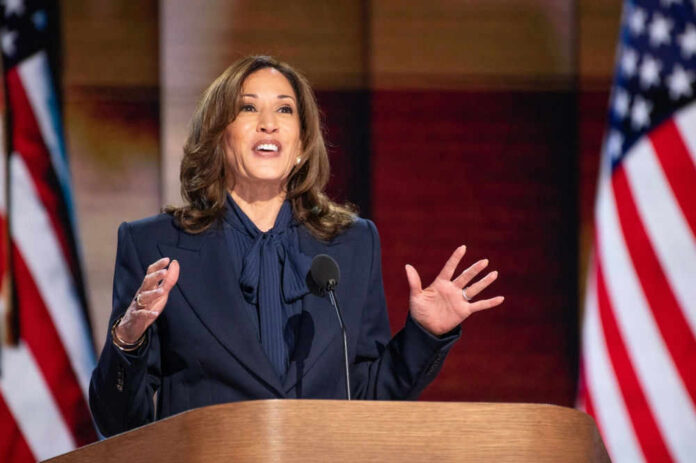
Democrats who spent years preaching “diversity first” are now quietly debating whether that same playbook—personified by Kamala Harris—has become a political anchor they can’t afford in 2028.
Story Snapshot
- Democratic insiders are signaling fatigue with identity-driven candidate selection after Harris’s 2024 loss and are talking more openly about “electability.”
- Harris is keeping her national profile alive with a major book tour and staffing moves, while avoiding direct talk of a 2028 run.
- Polling shows Harris still has measurable support among Democrats, but elite skepticism appears to be growing in party power circles.
- Other Democrats—especially governors and national figures—are positioning themselves as alternatives as the party’s 2028 primary calendar remains unsettled.
Democratic elites weigh a pivot away from DEI politics
Democratic strategists and donors are openly reassessing the party’s heavy emphasis on diversity metrics in top-ticket selection, a debate amplified by Kamala Harris’s 2024 defeat and her continued visibility in 2026. Reporting from inside Democratic gatherings describes a mood where Harris’s name is minimized and her future is treated cautiously, even as she remains a recognizable figure. The through-line is simple: party professionals want a nominee who can win swing states.
For conservative voters watching this unfold, the significance is less about Democratic personality drama and more about what it reveals: the same institutions that pushed DEI as a governing ideology now appear ready to downshift when electoral incentives change. That pattern matters because DEI politics didn’t stay confined to campaigns—it shaped hiring, contracting, education priorities, and a broader culture of political labeling. When political elites treat it as disposable, it undercuts the claim that it was ever about merit or fairness.
Harris stays visible, but avoids committing to 2028
Kamala Harris’s 2026 book tour and targeted appearances keep her in the national conversation without the accountability of declaring a campaign. Coverage describes sold-out events, carefully selected moderators, and stops that reinforce key constituency relationships. At the same time, sources quoted in reporting characterize her as “undecided,” and she has not offered a direct 2028 message. Her team decisions, including bringing back a familiar aide, suggest organizational maintenance even without an announcement.
Poll numbers complicate the insider narrative. Surveys cited in the available reporting show Harris leading or remaining competitive among Democrats, while other contenders like Gavin Newsom and Pete Buttigieg remain in range depending on the poll and time period. That split—poll resilience versus elite doubt—signals a party that may be drifting toward a managed primary, where calendar rules, endorsements, and donor pressure matter as much as voter preference. The primary schedule itself is a live fight, adding another layer of uncertainty.
Polling shows a party searching for a “winnable” identity
Data referenced in the research indicates Democratic voters still recognize Harris as a default option, particularly among key demographic groups, while independents remain central to any general-election path. At the same time, poll differences across months and methodologies show volatility rather than a settled consensus. The practical reality is that Democrats are treating 2028 as open terrain: the party’s bench includes governors and national figures, and the internal debate is about which coalition is large enough to beat Republicans.
Why this matters in Trump’s second term
President Trump’s second-term environment frames the Democratic argument: opposition politics usually rewards the challenger party, yet Democratic leaders appear anxious about repeating 2024 outcomes. Emerson polling referenced in the research also situates the broader environment with indicators like Trump’s approval and generic ballot positioning. For conservative readers, the key point is that the opposition party is still wrestling with whether to double down on the cultural ideology that fueled “woke” governance—or to rebrand as competence-first after years of institutional activism.
That tension is worth tracking because it affects what policies Democrats will champion in the next two years and how aggressively they will try to reintroduce DEI-style mandates through agencies, schools, and corporate pressure campaigns. If party elites decide identity-first messaging is a loser, they may not abandon the underlying machinery; they may simply rename it and soften the rhetoric while keeping the same levers of power. Voters should watch personnel, platform language, and primary-rule changes more than slogans.
The bottom line is that Harris’s standing is being judged on two tracks at once: public polling that still shows meaningful support and insider conversations that treat her as a risky bet. Whether Democrats “get off the diversity train” won’t be proven by one headline or one conference—it will show up in who gets funded, who gets protected by party rules, and which issues are quietly dropped when the next election math arrives.
Sources:
https://www.politico.com/news/magazine/2026/03/09/kamala-harris-2028-book-tour-democrats-00818284
https://emersoncollegepolling.com/june-national-poll/