

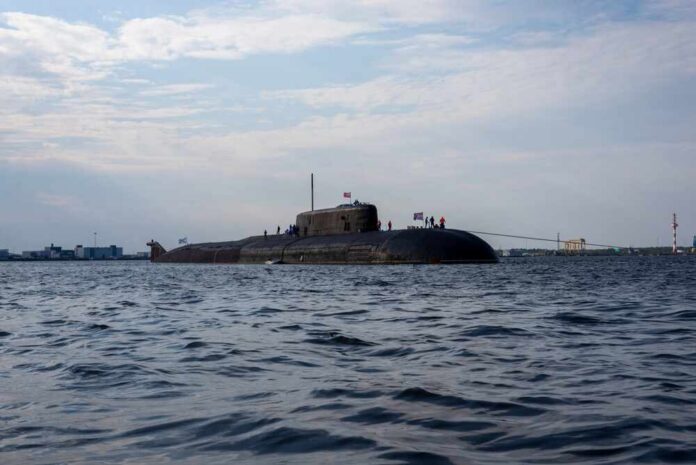
America is set to scrap four missile subs that carry 616 Tomahawks, and the Navy admits it has no equal replacement ready.
Story Highlights
- Four Ohio guided-missile submarines are scheduled to retire this decade, removing a huge strike magazine [3].
- The Navy plans to shift missions to Virginia-class Block V subs with the Virginia Payload Module, but with fewer missiles per boat [3].
- Public sources say each Ohio guided-missile sub can carry more than 150 Tomahawks and support special operations forces [6].
- Analysts warn of a near-term “strike gap” during the transition as new submarines are built and delivered [1].
What is being retired and why it matters
The Navy plans to retire four Ohio-class guided-missile submarines by the late 2020s, as part of a broader drawdown of aging Ohio hulls. These boats were converted from ballistic-missile designs and are reaching the end of their service lives. Each Ohio guided-missile submarine can carry more than 150 Tomahawk cruise missiles and host special operations teams, giving theater commanders stealthy, deep magazines on demand [6]. Losing four removes 616 potential launch cells from the fleet at once, which alarms many observers [1].
Congressional research records detail that the Navy intends to move conventional strike tasks onto newer platforms. Planning points to Virginia-class Block V submarines with the Virginia Payload Module, which adds extra missile tubes to attack submarines. This plan fits the larger shift to the Columbia-class ballistic-missile submarines that replace aging Ohio strategic boats in the 2030s. The Navy frames the change as a managed migration, not a sudden capability collapse, within a decades-long recapitalization plan [3].
The replacement plan and the hard numbers
Virginia-class Block V submarines with the Virginia Payload Module are the named substitute for much of the Ohio guided-missile strike role. But they are not a one-for-one swap in raw firepower. Public references put an Ohio guided-missile submarine at more than 150 Tomahawks, while a Block V Virginia carries far fewer missiles. That gap is simple math and easy for critics to repeat. The Navy’s answer is to spread firepower across more hulls and mission sets over time [3].
Defense analysis outlets say the retirement of four Ohio guided-missile submarines and other aging surface combatants could create an early-2030s shortfall measured in thousands of launch cells. One cited figure is a 2,080-cell loss once retirements stack up. That tally fuels headlines about a “missile gap,” especially while new Virginias are still in construction queues and delivery schedules remain tight for years to come [1].
Industrial timelines and risk during the transition
Shipbuilding plans emphasize major investments in submarines, including Columbia-class ballistic-missile boats and steady Virginia-class attack submarines. The Navy’s stated goal is about two Virginia deliveries per year on average through the next decade and a half. Even so, building, testing, and fielding Block V Virginias with the payload module takes time. The strike capacity that replaces the Ohio guided-missile boats will arrive in phases, not overnight, which increases near-term risk [16].
Policy and budget focus also tilt toward the Columbia-class program that sustains the nuclear triad. That priority is valid but can crowd out attention to conventional strike depth under the sea. Public documents do not show a complete, final Navy analysis proving that Virginia Block V boats and other assets will fully absorb the guided-missile mission in wartime. The plan may work, but the public record does not provide combat validation or a detailed transition risk ledger today [3].
What conservatives should watch
Taxpayers deserve clear answers on capability risk while billions flow to shipyards. Congress should demand the Navy’s guided-missile submarine retirement studies, delivery schedules, and war-game results that test strike load, survivability, and reload limits. The fleet must deter China and other threats now, not only in the 2030s. A prudent approach keeps aging subs safe and ready until replacement firepower is real, not promised, and ensures our sailors are never sent short of missiles when a fight starts [3].
Sources:
[1] Web – The U.S. Navy Spent Years Planning to Retire These 4 Missile …
[3] Web – Fact Sheet: The Ohio-Class Replacement Ballistic Submarine Program
[6] Web – Ohio-class submarine – Wikipedia
[16] Web – US Navy faces largest strike capacity loss since Cold War – Facebook