

The Supreme Court just reminded every president—including Trump—that “emergency” power can’t be a blank check to reshape the economy without Congress.
Quick Take
- A 6-3 Supreme Court ruling on Feb. 20, 2026, struck down President Trump’s sweeping IEEPA-based tariffs in Learning Resources Inc. v. Trump.
- The majority leaned on the “major questions” doctrine, signaling Congress—not the White House—must clearly authorize big economic moves.
- The decision blocks IEEPA as the fastest path for broad country-level tariffs, but it doesn’t end Trump’s tariff strategy.
- Trump quickly pivoted to new tariffs under Section 122 of the 1974 Trade Act, which carry tighter time limits unless Congress renews them.
What the Supreme Court Actually Ruled—and Why It Matters
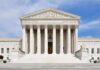
On February 20, 2026, the Supreme Court ruled 6-3 against President Trump’s attempt to impose sweeping tariffs under the International Emergency Economic Powers Act (IEEPA) in Learning Resources Inc. v. Trump. Chief Justice John Roberts wrote the majority opinion applying the “major questions” doctrine, a signal that major economic policy with broad consequences needs clearer authorization from Congress. For constitutional conservatives, that’s the core point: Article I gives Congress control over commerce.
The ruling stood out because the Court’s conservative majority has often been receptive to Trump’s legal arguments in high-stakes cases. Reporting and analysis around the decision noted Trump’s strong success rate in emergency appeals during his second term, making this tariff defeat unusually significant. The practical effect is narrower than the headlines suggest: the Court did not declare tariffs unconstitutional. It rejected this specific statutory route for tariffs, under this specific emergency-powers framework.
How IEEPA Became the Flashpoint for a Bigger Separation-of-Powers Fight
IEEPA was enacted in 1977 to let presidents regulate commerce during national emergencies tied to foreign threats. Trump’s team used IEEPA far more aggressively than prior administrations, turning an emergency-powers law into a primary tariff tool. The tariffs followed a broader “America First” trade push that included the April 2, 2025 “Liberation Day” baseline 10% tariff and additional levies targeting countries such as China, Mexico, Canada, Brazil, and India.
Opponents—including small businesses and state groups—challenged the IEEPA tariffs in court, arguing the statute was being stretched beyond its intended design. That set the stage for the Court’s “major questions” analysis: if a president wants to impose economy-wide duties with major downstream impacts, Congress must speak clearly. Even many Trump voters who like tariffs as leverage can recognize the constitutional logic here—because the same shortcut could be used later by a left-wing president to impose sweeping economic controls under a vague “emergency.”
The Split on the Court: Roberts’ Majority vs. Kavanaugh’s Dissent
The Court’s divide also matters for understanding what comes next. Justice Brett Kavanaugh authored a lengthy dissent arguing that tariffs are a traditional tool for regulating imports and that Congress meant IEEPA to grant broad authority in emergencies. In that view, the case should have been straightforward: the political branches set trade policy, and the statute already delegated the needed power. Justices Neil Gorsuch and Amy Coney Barrett joined Roberts’ major-questions analysis, forming a majority willing to cabin executive reach even under a conservative Court.
This is where the story gets more complicated than partisan talking points. The majority did not “ban” Trump’s trade agenda; it narrowed one legal mechanism. The dissent did not “crown” the president; it argued Congress had already delegated the authority. For voters concerned about permanent government expansion, the ruling reinforces a principle conservatives have long defended: emergency powers should not quietly become everyday governance, regardless of which party is in the Oval Office.
Trump’s Fast Pivot to Section 122—and the New Political Pressure on Congress
Trump’s response was immediate: he announced replacement tariffs under Section 122 of the 1974 Trade Act, described in analysis as a broad 15% tariff. That pivot confirms what several experts highlighted—Trump still has multiple legal pathways to pursue tariffs even after losing IEEPA. Section 122, however, comes with constraints that change the political terrain, including a 150-day limit unless Congress votes to renew, forcing lawmakers to own the policy rather than letting it run on autopilot.
One underappreciated detail is what the decision does not do: it does not automatically require refunds of tariffs already collected under IEEPA, based on the available reporting and expert summaries. Meanwhile, businesses and consumers remain exposed to tariff-driven price effects as the administration shifts tools. The most durable takeaway may be institutional: the Court signaled it is willing to check executive improvisation on major economic policy, while Trump signaled he will keep pressing the issue through statutes that more clearly involve Congress.
Sources:
Politico – Supreme Court strikes down Trump tariffs (Feb. 20, 2026)
Chatham House – US Supreme Court strikes down Trump’s tariffs: early analysis
SCOTUSblog – Supreme Court strikes down tariffs
Brookings – Experts on the Supreme Court’s tariff decision
Supreme Court of the United States – Opinion PDF in Learning Resources Inc. v. Trump