

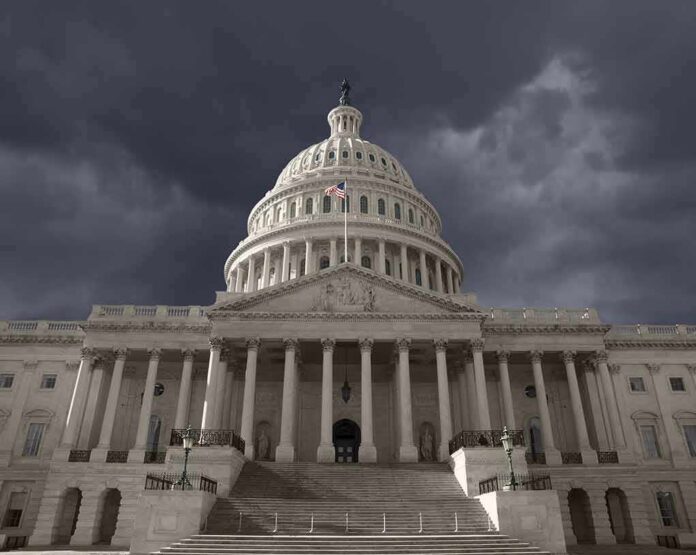
The Senate’s 60-vote wall stalled the SAVE Act again, leaving voter-citizenship checks stuck in neutral.
Story Snapshot
- Congress formally sent the SAVE Act to the Senate, where it stalled under the 60-vote rule.
- Reports say the Senate failed multiple times to advance the bill or its key parts.
- No Senate Democrat voted for the measure, while a few Republicans also broke ranks.
- President Trump and conservative senators pushed for continued votes, but leaders saw no path.
What The SAVE Act Does And How It Reached A Standstill
Congressional records show the Safeguard American Voter Eligibility Act, also called the SAVE Act, moved from the House to the Senate in April 2025. The bill would require proof of United States citizenship for voter registration and strengthen voter identification rules. The Senate received H.R. 22 and kept it in the Rules and Administration Committee while leaders eyed votes on the floor. That set up a fight over the chamber’s 60-vote threshold to advance debate on major bills.
Coverage in 2026 documented repeated Senate tries that fell short of the needed support. A local affiliate report said leaders held five votes on the SAVE Act or core pieces tied to it. Each effort missed the 60 votes needed to move forward. Republican senators also said the majority did not have the votes to force the issue under current rules. That reality shaped every strategy talk and ruled out quick passage before key recess dates.
How The Votes Broke Down And Why It Mattered
Reporting from Washington outlets said not a single Democrat backed the SAVE Act in Senate votes. The same reports noted some Republicans also opposed the broader package. Names included Lisa Murkowski and Thom Tillis, with leadership figures like Mitch McConnell also noted in coverage of intraparty debate. That mix meant a united front did not form on the right, while the left held firm. The Senate’s 60-vote rule turned that split into a hard stop for the bill.
President Trump urged the Senate to stay in session and keep voting until the bill moved. Conservative senators Mike Lee and Rick Scott pushed to block the August break unless the chamber advanced the SAVE Act. Senate Republican Leader John Thune answered that he would hold senators in Washington if a real path existed. He warned that more show votes without new support would waste time and stall other work during campaign season.
What Democrats Say Versus What The Bill Requires
Senate Democrats said their core objection was not photo identification by itself. They argued the SAVE Act’s proof-of-citizenship rules would make lawful registration harder for some voters. They warned that many common identifications do not list citizenship and that applicants might need to bring a passport or birth certificate in person. They opposed adding the bill to must-pass items, calling it a controversial change to voting policy.
When you don’t eliminate the filibuster, end blue slip, fire the parliamentarian, pass the SAVE America Act, confirm recess appointments, end weekly payments to the Taliban among the other 700 items you dropped the ball on, you ALL need to lose your job! @GOP @SenateGOP @VP
— Sandy Carlson-Davis (@sanmaurs) November 7, 2026
Backers of the SAVE Act point to the simple principle that only citizens should vote. They argue that current systems often rely on a sworn statement of citizenship, not documents. They say proof at the front end protects legal votes, avoids messy roll cleanups, and boosts trust. But the Senate debate has centered on the 60-vote bar, not only the policy details. Without bipartisan votes, the chamber’s rules keep the bill from moving to final passage.
What Comes Next For Election Integrity Law
Recent accounts say even narrower voter identification votes failed to reach 60. One amendment drew 53 votes in March, and a stand-alone identification bill got 52 in August, both short of the mark. That record shows the roadblock is not only the SAVE Act brand. It also reflects broader fights over federal rules for voting and registration, and how far Congress should go in setting them for the states.
The bottom line is clear. The House sent the SAVE Act to the Senate, and the Senate’s 60-vote rule, unified Democratic opposition, and a few Republican defections stopped it. President Trump and conservatives pressed for action, but leaders said the votes were not there. Until that changes, election-integrity bills will keep colliding with the same wall. The process is slow, but the stakes for confidence in our elections remain high.
Sources:
congress.gov, washingtonexaminer.com, thehill.com, pbs.org