

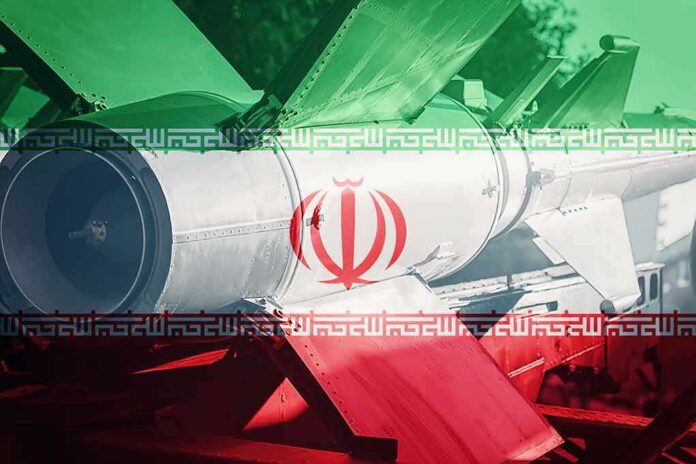
Iran’s supreme leader reportedly ordered his forces to bring every U.S. and Israeli asset “within reach,” promising responses without geographic limits if attacks resume.
Story Snapshot
- Reported directive expands Iran’s target list to U.S. and Israeli assets worldwide.
- Statement warns of “immediate” and “geographically unrestricted” responses to new attacks.
- Order pairs threats with calls to boost weapons output and intelligence capacity.
- U.S. planning reportedly readies strike options on Iranian sites within 96 hours.
What Tehran Said And Why It Matters
Reports say Supreme Leader Mojtaba Khamenei told Iran’s military to expand targeting to “all U.S. and Israeli assets, tangible and intangible,” while warning that any renewed attacks would face an “immediate” response without geographic limits. Coverage of the statement described it as deterrence language, but it left key terms vague, like what counts as a triggering attack. The same reports did not include an official document or full public text, which limits outside verification of exact wording.
The statement, as reported, set a condition: if the United States or Israel “once again” launches military or terrorist attacks, Iran would decide the time and terms to end the fight. That framing fits Iran’s past pattern of warning rivals to back off while keeping options open. It also used sweeping phrases like “geographically unrestricted,” which media and policymakers read as a global threat, not just a regional one.
Military Readiness Claims Inside The Order
Beyond targeting language, the reported directive urged more ammunition and weapons output, stronger military intelligence, and more native defense systems. Those points matter for Americans because they suggest Tehran wants staying power, not only a one-off punch. Still, the reporting did not show a target database, a numbered order, or unit-level tasking. That means the world sees the threat message, but not proof that specific U.S. bases, ships, or companies were added to a live strike list.
For families with loved ones in uniform or working at overseas posts, this rhetoric raises real risk. Iran and its network can move through proxies and cyber tools. Yet nothing in the reports confirms an imminent attack window or a formal green light for action. It signals posture and intent if attacked, not a start time. That distinction matters when weighing travel, deployments, and business exposure tied to American and Israeli interests.
How Washington Is Positioning Under President Trump
U.S. officials have prepared a wide range of military options. Reporting says U.S. Central Command and the Pentagon have developed target sets that include Iranian energy infrastructure, military sites, and nuclear facilities. Those plans could be executed within 96 hours of an order from President Trump, according to sourced accounts. This planning aims to deter Iran, protect U.S. personnel, and hold critical levers of Iran’s power at risk if Tehran escalates.
American intelligence officials reportedly judge Iran and allied groups are unlikely to strike first right now, but would hit back if Iran is targeted. That could include attacks on U.S. personnel and facilities in the region and beyond. Such assessments remind us that deterrence cuts both ways: strength and clarity help prevent miscalculation, while vague red lines can invite tests and danger for our troops and diplomats.
What Conservatives Should Watch Next
Three gaps deserve close attention. First, verification: the reports do not show a full official Persian text or archive entry for the directive. Second, thresholds: Tehran has not defined what actions count as renewed “attacks,” especially in cyber or covert space. Third, movement: satellite cues, missile unit activity, or militia tasking would show whether rhetoric is becoming operations. Until then, the directive reads as a strong deterrent signal with open-ended scope.
NEW: Senior officials from the Mecca Pact’s three signatories met with senior Iranian officials in Tehran on October 26 to discuss a new US-Iran deal in concert with ongoing Pakistani and Qatari efforts.
Read more ⬇️ https://t.co/7Ax5kkxQE1
— Institute for the Study of War (@TheStudyofWar) October 27, 2026
For Americans who value peace through strength, two guardrails apply. The United States must keep credible options ready and visible, so Iran knows a strike would fail and cost dearly. At the same time, clear rules and tight command help avoid a rush into wider war. President Trump’s team appears to be pairing ready plans with caution about first moves, while reinforcing U.S. forces to shield our people and our allies from Tehran’s threats.
Sources:
dailysabah.com, store.jpost.com, timesofindia.indiatimes.com, humenglish.com, timesofisrael.com, cnn.com