
President Trump’s $145 shoe gifts have turned into a bizarre Washington loyalty test—one that left Secretary of State Marco Rubio publicly wearing footwear that appears not to fit.
Story Snapshot
- Multiple outlets report President Trump has been gifting Florsheim dress shoes to administration officials and allies, sometimes guessing sizes incorrectly.
- Photos of Secretary of State Marco Rubio show visible heel gaps, fueling online mockery and questions about why top officials would wear ill-fitting shoes.
- Reporting describes a workplace dynamic where some staffers felt pressure to wear the shoes to avoid displeasing the President.
- A menswear expert warned that poorly fitting shoes can cause real physical problems, not just cosmetic ones.
How a $145 Shoe Became a National Political Rorschach Test
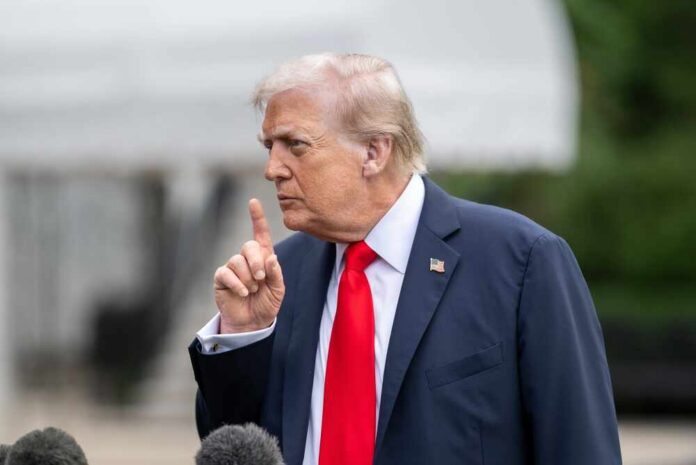
President Donald Trump has reportedly developed a habit of buying and gifting $145 Florsheim oxfords to members of his administration, plus a circle of political and media allies. Accounts describe Trump keeping shoes on hand, pulling out a catalog during meetings, and directing aides to place orders. The attention intensified after images circulated of Secretary of State Marco Rubio appearing to wear an oversized pair, with noticeable gaps at the heel.
Reports say the practice accelerated after Trump criticized the footwear of Vice President JD Vance and Rubio during a meeting, then began distributing Florsheims. A December White House visit involving The New York Times reportedly included officials showing the gifted shoes, reinforcing that this was not a private quirk but a visible, shared ritual. The story’s oddity is not the brand or price—it is the expectation that powerful people display compliance in public.
Rubio’s Photos and the Politics of Looking “On Script”
Marco Rubio became the face of the episode because the evidence is visual. Multiple photos show Rubio in dress shoes that appear too large, including an instance on Capitol Hill and other public settings where the heel gap is easy to spot. The reporting leaves an unresolved question: were the shoes simply the wrong size, or were they worn despite discomfort to signal unity and good standing? The images are what drove the online reaction.
The sources also describe uncertainty about the details behind the orders. Florsheim’s corporate leadership reportedly denied awareness of any special arrangement tied to the President, which leaves open whether purchases were routed through aides or intermediaries. The number of pairs bought has not been nailed down publicly in the research provided. That lack of hard accounting matters because the narrative has spread faster than the confirmed specifics.
Pressure Culture Inside the Executive Branch—And Why It Matters
Several accounts frame the shoe gifting as more than a gag. White House officials were quoted describing a fear of being seen without the shoes, suggesting a culture where small personal signals can carry career implications. The reporting also includes the idea that this may function as a loyalty-signaling mechanism, though that motive is inferred rather than explicitly confirmed. Even without mind-reading, the alleged pressure dynamic is the core institutional concern.
For conservative readers, the lesson is not about fashion; it is about how power operates in a bureaucracy. The modern federal government already has a long history—especially in the years before Trump returned to office—of prioritizing performative signaling, whether through DEI mandates or speech codes. This story flips the script: instead of progressive virtue rituals, it is a personal-presidential ritual. Either way, the public should prefer institutions that reward competence over compliance theater.
Health, Dignity, and the Limits of “Just Wear It”
A menswear writer quoted in the reporting made a practical point: ill-fitting shoes can cause real physical issues, unlike a suit that merely looks sloppy. That matters because the story’s humor has overshadowed a basic workplace reality—people should not be nudged into choices that harm their health just to avoid awkwardness with a boss. If the photos reflect genuine discomfort, the episode becomes a small but telling case study in priorities.
The coverage also emphasizes how quickly a small internal habit can become a national spectacle. Democrats and online commentators mocked Rubio, but the underlying issue is bigger than one official’s shoes: a White House should be focused on policy execution, not creating a public-facing compliance routine that distracts from serious work. The reporting available does not establish any legal or ethical violation—only a strange cultural moment with real reputational costs.
Marco Rubio Mocked for Wearing Oversized Shoes Amid Report Trump Gifts Officials Footwear They Are Too 'Afraid Not to Wear' https://t.co/QIHsbSkzE0
— Mediaite (@Mediaite) March 11, 2026
For now, the documented facts remain limited to what outlets observed and what unnamed officials described: repeated gifting, size-guessing that can be wrong, visible examples of poor fit, and a perception among some staffers that refusing to wear the gifts is risky. If more on-the-record confirmation emerges, the public will be able to judge whether this was simply an eccentric tradition or something closer to an enforced symbol of loyalty.
Sources:
https://www.thedailybeast.com/trump-aides-too-afraid-to-take-off-the-145-shoes-he-keeps-buying-them/
https://www.aol.com/articles/marco-rubio-pictured-145-trump-144634261.html