
President Trump’s clash with Netflix isn’t just about a board seat—it’s a real-time test of whether corporate media power will keep sheltering partisan operatives while demanding Washington stay “neutral.”
Quick Take
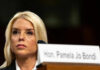
- President Trump publicly warned Netflix of “consequences” if it does not remove board member Susan Rice after her comments urging corporate resistance to Trump.
- Rice, an Obama-era official who joined Netflix’s board in 2018, drew attention after advising companies to preserve documents for potential future Democratic investigations.
- The dispute unfolded as Netflix pursued a massive Warner Bros. Discovery acquisition that would have required federal antitrust review, highlighting how politics and regulation collide.
- Netflix later withdrew its Warner Bros. Discovery bid, insisting the decision was financial rather than regulatory, leaving key questions about timing unresolved.
Trump’s Demand Targets a High-Profile Political Operator on Netflix’s Board
President Donald Trump used Truth Social on Feb. 22, 2026, to demand that Netflix remove Susan Rice from its board, pairing the demand with a blunt warning of “consequences.” The post followed Rice’s appearance on a podcast hosted by former U.S. attorney Preet Bharara, where she advised corporations not to bend to Trump’s influence and to preserve records in case Democrats later investigate. Netflix and Rice had not responded publicly as of Feb. 23.
Rice’s corporate role matters because it ties a streaming giant’s governance to a figure deeply associated with Democratic national-security leadership. According to the reporting summarized in the research, she joined Netflix’s board in 2018 and is now being singled out not for a movie slate, but for political messaging aimed at corporate America. For conservatives who watched major institutions embrace ideological compliance campaigns in recent years, the episode spotlights how openly political some boardroom voices have become.
A Merger Backdrop Raises the Stakes for Government Power and Corporate Influence
The confrontation landed during Netflix’s pursuit of a reported $83 billion acquisition of Warner Bros. Discovery, a deal that would have required federal antitrust clearance. That context is why the story draws attention beyond personalities: regulatory approval can become leverage, and major corporations know it. The available reporting also says Trump has praised Netflix at times while still expressing concerns about dominance if the company becomes too powerful through consolidation.
Politico reported that Netflix co-CEO Ted Sarandos met with Trump in November 2025, before the bid was announced, and met again more recently as Netflix tried to build a working relationship in Washington. The same reporting described how GOP-aligned lobbyists view Trump’s approach as personal and outcome-driven—more like a negotiation where he expects to “raise the trophy” for a successful deal. That may be frustrating for corporate strategists, but it reflects how politics actually works.
Netflix Drops the Bid, Citing Financial Discipline—But Timing Questions Remain
After the most recent Sarandos-Trump contact and amid shifting offers in the broader media landscape, Netflix ultimately withdrew its Warner Bros. Discovery bid. Politico reported that Warner cited a superior offer involving Paramount Skydance, and Netflix said its pullback reflected a “disciplined financial approach,” not fear of regulators. That statement narrows what can be proven: the company denies political pressure drove the decision, and the research does not provide direct evidence contradicting Netflix’s explanation.
Still, the sequence of events is the reason the episode resonates. Conservatives have long argued that big media companies often operate with a built-in ideological tilt while insisting politics never touches their business decisions. Here, politics is plainly part of the story: a sitting president is publicly challenging a board member over anti-Trump activism, at the same time the company has major interests potentially affected by DOJ scrutiny. With no public response from Rice or Netflix on the personnel demand, the standoff remains unresolved.
Market and Cultural Signals: Accountability vs. Overreach, With Limited Public Answers
Valuesense reported that Netflix shares rose about 2.2% to $78.67 following the demand, suggesting investors did not immediately view the confrontation as catastrophic. The broader debate, however, goes beyond short-term trading. Critics characterized Trump’s posture as government overreach into private corporate governance, while supporters framed it as holding powerful institutions accountable when they elevate officials who appear to encourage partisan resistance campaigns. Based on the sources provided, the factual record confirms the demand and the merger context, but not any private quid pro quo.
The constitutional and civic issue for many voters is where to draw the line between free speech, corporate independence, and political influence inside institutions that shape national culture. The research focuses on this one conflict rather than a broader audit of Netflix programming, so claims about the platform’s overall “bias” are not fully documented here. What is documented is a clash between a president willing to pressure corporate leadership publicly and an executive class accustomed to treating politics as something to manage—quietly—until it becomes unavoidable.
Sources:
Netflix’s wake-up in Trump’s Washington
Trump demands Netflix (NFLX) fire Susan Rice from board (2026)