
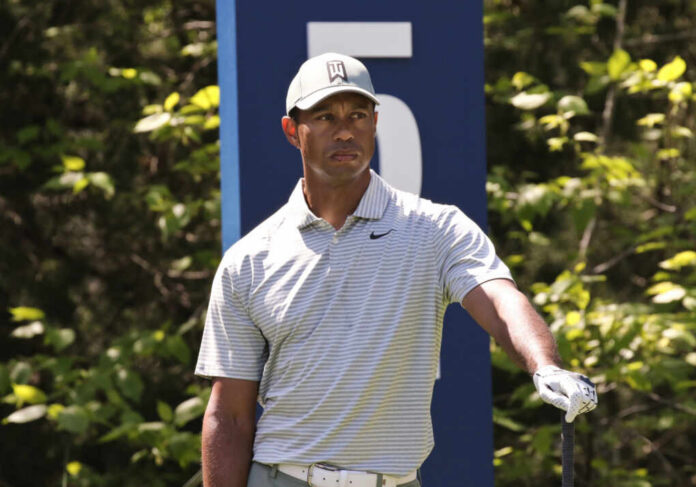
A single rollover on a quiet Florida road just turned Tiger Woods’ “triple-zero” breath test into a national warning about impairment that doesn’t show up on a breathalyzer.
Quick Take
- Tiger Woods was arrested March 27, 2026, after a rollover crash on Jupiter Island, Florida, near his home.
- Investigators said breath testing showed “triple zeroes,” but officers still observed signs of impairment consistent with medication or drugs.
- Woods faces two misdemeanor charges: DUI with property damage and refusal to submit to a lawful test after declining a urine test.
- Authorities said the exact substance may never be confirmed, highlighting a gap between observed impairment and definitive toxicology.
What police say happened on Jupiter Island
Jupiter Island Police responded just before 2 p.m. ET on March 27 to a rollover crash at 281 South Beach Road, a small two-lane stretch described as having no shoulder. Investigators said Woods was driving a Range Rover at high speed and tried to pass a pickup truck pulling a pressure-cleaner trailer. Authorities said he swerved to avoid a collision, clipped the trailer, and rolled the SUV.
Martin County Sheriff’s Office DUI investigators took over, administered field sobriety tests, and arrested Woods on suspicion of DUI. Officials said neither Woods nor the pickup truck driver was hurt, and Woods was able to crawl out through the passenger-side door. Under Florida DUI procedure cited in reporting, Woods was held in jail for at least eight hours before the next steps in the process moved forward.
“Triple zeroes” breath test, but impairment still alleged
Sheriff John Budensiek told reporters investigators did not believe Woods was impaired by alcohol because the breathalyzer showed “triple zeroes.” Instead, Budensiek said the suspected impairment involved “some type of medication or drug.” That distinction matters because many Americans still equate DUI exclusively with alcohol, while law enforcement and courts increasingly deal with impairment cases tied to prescriptions or other substances.
The case is also limited by what authorities can prove. Budensiek said investigators may never get definitive results for what Woods was impaired on at the time of the crash, and reporting said no drugs or medication were found inside the Range Rover. Woods’ refusal to provide a urine sample adds another layer, because toxicology confirmation often becomes the clearest evidence when alcohol tests come back at zero.
The charges and why refusal becomes its own legal problem
Authorities said Woods faces two misdemeanor charges: DUI with property damage and refusal to submit to a lawful test. Refusal can be consequential because it often triggers administrative penalties and can complicate a defendant’s position in court, especially when officers claim observable impairment. In practical terms, the state can argue the totality of circumstances—driving behavior, crash dynamics, and field observations—when a lab result is unavailable.
A pattern of crashes and the accountability question
Reporting also points back to Woods’ prior traffic-related incidents, including a 2017 DUI arrest in Palm Beach County. Separately, Woods suffered a major one-car crash outside Los Angeles in February 2021, sustaining serious leg injuries that required surgery and a lengthy hospital stay. That history does not prove impairment in this 2026 case, but it does reinforce why fans and critics alike are asking the same basic question: who ensures he isn’t behind the wheel when he shouldn’t be?
What remains unknown—and what the public should take from it
No statement from Woods or his legal team was included in the available reporting, and NBC News said it had reached out without hearing back. The key unknown is the alleged substance, because investigators have acknowledged they may never be able to identify it definitively. For the public, the takeaway is simple and nonpartisan: impaired driving is a real-world threat whether it comes from alcohol, prescriptions, or other drugs, and celebrity status doesn’t change the physics of a rollover.
If prosecutors proceed without toxicology, the case will likely hinge on officer observations, crash circumstances, and the refusal allegation. For ordinary Americans who are tired of double standards, that’s the central test: whether the system applies the same rules to a famous athlete that it applies to everyone else on the road—especially in a residential community where one bad decision can put innocent families in harm’s way.
Sources:
Tiger Woods involved in rollover crash on Jupiter Island, deputies say
Tiger Woods involved in Florida rollover crash
Tiger Woods arrested on suspicion of DUI after rollover crash in Florida
Tiger Woods rollover crash: Jupiter Island, Florida