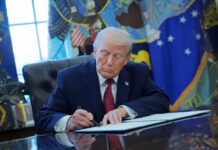

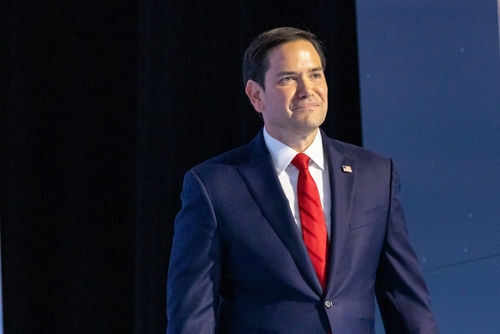
A viral clip tried to paint President Trump as Israel’s puppet in Iran—but the full video tells a very different story about who made the call and why.
Story Snapshot
- The White House says an edited social media post falsely claimed Secretary of State Marco Rubio said Israel “dragged” Trump into war with Iran.
- Press Secretary Karoline Leavitt released the full Rubio remarks, emphasizing the U.S. acted based on its own threat assessment.
- Officials point to Iran’s expanding missile-and-drone capabilities and an approaching “immunity line” as a key driver for preemptive action.
- Reporting also describes a wider U.S.-Israel operational push—paired with intense diplomacy—to blunt Iran’s capabilities and pressure Hezbollah.
White House Pushes Back on a Viral “Dragged Into War” Narrative
Karoline Leavitt moved quickly after a viral post from the “Rapid Response 47” account circulated an edited clip of Marco Rubio suggesting Israel “dragged” President Trump into war with Iran. Leavitt disputed the claim and posted context indicating Rubio argued the operation was driven by U.S. security needs. The dispute matters because it shapes whether Americans see the conflict as an elected commander-in-chief acting on U.S. interests—or as Washington being steered by outsiders.
Rubio’s full comments, as described in coverage of Leavitt’s response, emphasized timing and capability rather than alliance pressure. The stated rationale centered on Iran’s accelerating drone and missile advances and a narrowing window before Tehran could reach an “immunity line” where defensive measures would be less effective. The White House line is straightforward: the decision to strike was preemptive and independent, even if Israel’s actions and regional threats overlap with U.S. priorities.
What the “Immunity Line” Argument Signals About Strategy
Multiple reports frame the strikes as a response to intelligence assessments that Iran was building a missile-and-drone posture increasingly difficult to stop. That context is crucial for understanding the administration’s messaging: it’s not just about retaliation, but about denying Iran the ability to mass capabilities that threaten U.S. forces, allies, and shipping routes. When officials argue the window was closing within roughly a year to a year and a half, they are defending urgency, not escalation for escalation’s sake.
Business reporting on Israel’s defense posture also described the strikes as “preemptive,” with a focus on preventing threats rather than absorbing them. That aligns with the administration’s public posture that this was not a casual intervention but a deliberate choice tied to a specific threat trajectory. The research provided does not include independently verifiable details on the underlying intelligence beyond what officials and analysts said publicly, so readers should separate confirmed operational facts from broader claims about classified assessments.
Operation Epic Fury, Fast-Moving Combat Claims, and the Limits of Public Detail
Separate coverage describes coordinated U.S.-Israel operations under the name “Operation Epic Fury,” with President Trump monitoring from the White House as strikes targeted Iranian military capabilities. Reporting characterized Trump as saying the war was “very complete” in terms of degrading Iran’s navy, air force, missiles, and drones, while also calling the effort “just the beginning” in the context of longer-term outcomes. Those competing phrases underscore a recurring wartime reality: tactical gains can be clearer than strategic endpoints.
Jewish Insider’s account also points to a regional spillover picture involving Hezbollah and Lebanon. It reports Hezbollah violated a prior ceasefire and that Hezbollah’s attacks have at times outpaced Iran’s direct launches against Israel, while Lebanon’s leadership sought de-escalation as civilians faced severe disruption and displacement. That matters for Americans tracking how quickly a “limited” campaign can widen—especially when Iran-backed proxies, border pressures, and humanitarian fallout create new leverage points and new demands for U.S. involvement.
Energy Chokepoints, Strait of Hormuz Risk, and Why Americans Should Watch Costs
The Strait of Hormuz hangs over the conflict as an economic pressure valve, not just a geographic detail. The provided research highlights concern that escalation—or threats involving Hormuz—could rattle global oil flows and spike prices, even if fighting stays largely regional. That’s the kitchen-table angle many families remember from past Middle East crises: higher energy costs feed inflation across food, shipping, and household goods. If the conflict enters an “energy phase,” as one analyst warned, Americans could feel it quickly.
Axios reporting adds another layer: alliance management under pressure. It described Israeli concerns about the possibility of U.S.-Iran talks that might move ahead without Israel fully aligned, while U.S. officials denied secret negotiations and emphasized coordination. Put together, the reporting suggests two things can be true at once: Washington and Jerusalem can operate closely day-to-day, and they can still disagree about end states, timelines, and what “victory” means. That tension makes clear messaging—and accurate video context—more than a PR issue.
Sources:
White House Denies Rubio Said that Israel Dragged Trump into War with Iran
Trump, Iran war, Strait of Hormuz, Israel, Lebanon, Hezbollah, missiles
Iran, Netanyahu, Trump, White House talks
Israel and US strike Iran preemptive, defense chief says