

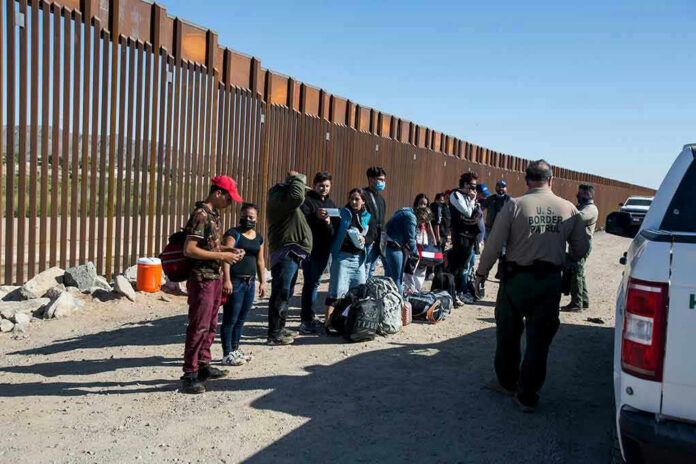
The Border Patrol union’s challenge to James Talarico’s record zeroes in on his opposition to Trump’s Big Bend wall plan while he pushes citizenship for some illegal immigrants, sharpening a stark 2026 border-choice for voters.
Story Highlights
- Talarico opposed the proposed Big Bend border wall while favoring barriers only in select areas.
- He backs a pathway to citizenship for longtime illegal immigrants under conditions.
- He brands himself a “border security Democrat” and says Joe Biden failed on the border.
- Reports say his plan leans on more agents, surveillance, and immigration judges.
Union Flashpoint: Big Bend Wall Rejection
Reports show Talarico condemned President Trump’s proposed wall segment across Big Bend, calling it the wrong project in the wrong place. He argued the government should use barriers only where traffic is dense, not across a national park and remote terrain. The union’s critique gains traction here because it highlights a clear, on-record rejection of a major construction plan. That stance draws a bright policy line for voters who view physical barriers as a core border tool under President Trump’s enforcement agenda.
Talarico’s own statements make the split sharper. He says he supports barriers “where they’re needed,” but he still opposes the Big Bend project specifically. For many conservatives, that sounds like hedging on a proven deterrent. The contrast matters, because the Trump administration has prioritized layered security: walls and fencing in key corridors, backed by manpower and technology. When a candidate rejects a signature segment, it raises questions about resolve and priorities in a crisis many Texans live every day.
Leniency vs. Enforcement: Path to Citizenship and Priorities
Talarico supports a pathway to citizenship for some long‑time illegal immigrants who meet conditions, like paying fines or back taxes and meeting English rules. He also says immigration enforcement should focus on drug smugglers, human traffickers, and terrorists over low‑threat residents. Supporters call this common sense. Many conservatives see it as narrowing enforcement and rewarding illegal entry. The policy choice affects deterrence: if legalization is on the table, more people may test the system while cartels exploit any gap.
Coverage notes that Talarico brands himself a “border security Democrat” and says Joe Biden “failed” to secure the border. That framing tries to neutralize the charge that he is weak on enforcement. But it does not erase the split over core tools like physical barriers in tough terrain. Voters should separate rhetoric from results. A border plan that delays wall segments or shifts focus away from broad interior enforcement can reduce pressure on illegal crossings, even if it adds staff or software at the margins.
What His Plan Emphasizes: Agents, Surveillance, and Judges
Reports describe Talarico’s plan as heavier on hiring more Border Patrol agents, expanding surveillance, and adding immigration judges to cut the asylum backlog. Those pieces can help. Cameras and sensors extend eyes in the field. More judges can shorten bogus claims. More agents matter if policy backs them up. But these tools work best with hard barriers that slow and channel crossings into controlled points. Without that backbone, technology becomes watch‑and‑release and courts become clogged again by shifting waves.
Some local leaders have praised parts of his approach while opposing a new wall through Big Bend, arguing it protects a park and tourism. Voters still must ask whether that trade protects Americans first. Cartels choose routes based on our weakest spots. If Big Bend remains open ground, traffic and smuggling can surge through remote corridors and strain nearby towns. President Trump’s border framework aims to close those gaps with layered defense. Picking and choosing projects risks leaving doors unlocked in the desert night.
The Bottom Line for Voters
Here is the clear record: Talarico opposed the Big Bend wall project and supports a conditional path to citizenship, while favoring narrower enforcement priorities. He also says he wants more agents, surveillance, and judges, and calls himself pro‑security while blasting Joe Biden’s failures. The union’s critique targets the practical effect of these choices. Walls backed by manpower have reduced crossings in the past. Pulling back on barrier projects invites cartels to probe for soft spots.
Texas families deserve secure borders, safe towns, and a system that does not reward illegal entry. President Trump’s approach centers on strong barriers, tough interior enforcement, and faster removals. Talarico’s record, as reported, points to selective walls, legalization pathways, and narrowed deportation priorities. That is the real choice. Voters who want the border locked, not just monitored, should weigh which plan shuts the back door and which one leaves a welcome mat beside a weak latch.
Sources:
pjmedia.com, cnn.com, dallasnews.com