
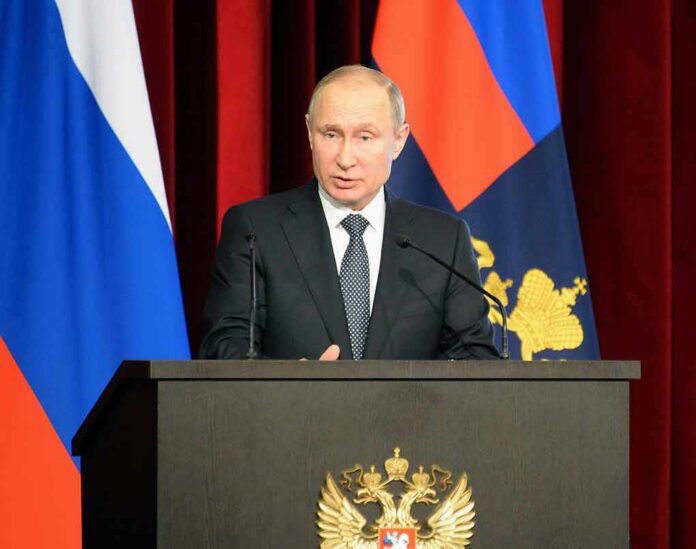
Russian President Vladimir Putin personally told President Trump that Moscow has no plans to attack Europe, the Kremlin says, a claim that could reshape the debate over how hard America should keep pushing for peace in Ukraine.
Story Snapshot
- Kremlin aide Yuri Ushakov says Putin told Trump Russia has no “aggressive plans” toward Europe.
- The Kremlin described the phone call between the two leaders as “extremely frank.”
- Trump has publicly agreed, saying Putin “is not going to be attacking a NATO territory.”
- European officials and Western analysts still warn Russia runs sabotage and cyber operations across the continent.
Kremlin Says Putin Gave Trump Direct Assurance
Yuri Ushakov, Putin’s foreign policy aide, told reporters on September 8, 2026, that Putin used a phone call with Trump to shoot down “speculation about Russia’s alleged hostile intentions toward European countries.” Ushakov said Putin made clear “we don’t have any aggressive plans regarding Europe.” The Kremlin described the call itself as “extremely frank,” a word choice suggesting both leaders spoke openly instead of trading talking points for cameras.
This is not a one-time line from Moscow. Putin said almost the same thing in a Kremlin transcript from May 2026, declaring “Russia has never had any aggressive intentions regarding European countries” and has “never threatened” them. For Trump, who campaigned on ending the war in Ukraine through direct talks instead of endless funding, a repeated denial straight from Putin is the kind of opening Washington’s old foreign policy establishment refused to even test.
Trump Pushes Direct Diplomacy Over Endless Funding
Ushakov also said Putin used the call to reaffirm his push for “a political and negotiated resolution” rather than open-ended war, a message consistent with what Moscow told Washington back in July 2025. For a president who has spent months pressing both sides toward the table, that consistency matters more than statements filtered through European capitals that have leaned on American money and troops to fund a war without end.
Trump did not just relay the Kremlin’s message; he backed it up publicly. Speaking in late August 2026, Trump said of Putin, “He’s not going to be attacking a NATO territory,” adding flatly, “they’re not going to attack.” That comment drew heavy coverage across Europe, where officials have spent months warning about Russian aggression while resisting pressure to shoulder more of their own defense costs.
Europe Remains Skeptical Amid Sabotage Fears
Kremlin spokesman Dmitry Peskov dismissed the wave of NATO-attack warnings outright, calling them “scare stories” that have “nothing to do with reality.” Whether or not that dismissal satisfies skeptics, it matches Trump’s own read of the situation and cuts against the narrative pushed by some European leaders eager to keep American resources flowing into the continent’s defense indefinitely.
Not everyone is buying the reassurance. A Western official quoted by the Telegraph said Russia has “a very clear appetite” for sabotage and cyber operations against NATO countries, even while avoiding direct confrontation, warning of “the risk of miscalculation.”
BREAKING: Putin and Trump had ‘extremely frank’ phone call after US envoys visit, Kremlin aide says
Russia has no 'aggressive plans' towards Europe, Putin told Trump
READ: https://t.co/lcIwUwMBsp
Via: https://t.co/IagLgUbqAi pic.twitter.com/Tp1Uu7WgPY
— Ivan Feghali (@IvanFeghali) September 8, 2026
That warning deserves attention, and Americans should never ignore real security threats. But there is a difference between staying alert and using vague fears to justify open-ended war spending. Trump’s approach treats Putin’s direct assurances as a starting point for verification, not blind trust, while still refusing to let Brussels dictate American foreign policy or drag the country into another forever war before real diplomacy is even given a chance.
The phone call, and the matching public statements from both leaders, mark the clearest sign yet that Trump intends to keep pursuing direct talks with Moscow, even as some European governments push back. Voters who elected Trump to end the war, not bankroll it forever, will likely see this as proof his strategy of talking to Putin directly is producing results the old Washington playbook never managed.
Sources:
military.com, wtop.com, swedenherald.com, mirror.co.uk, cnn.com, en.ara.cat