
A new NASA observatory aims to directly photograph nearby Earth-like planets and read their skies for signs of life.
Story Highlights
- NASA’s Habitable Worlds Observatory is designed to image and study about 25 potentially habitable worlds.
- The mission responds to the National Academies’ Astro2020 call for a large ultraviolet, optical, and infrared telescope.
- NASA has selected industry proposals to mature key technologies for this search-for-life mission.
- The project remains in pre-formulation and technology development before full mission build and launch timelines.
NASA Sets Sights on Nearby “Second Earths”
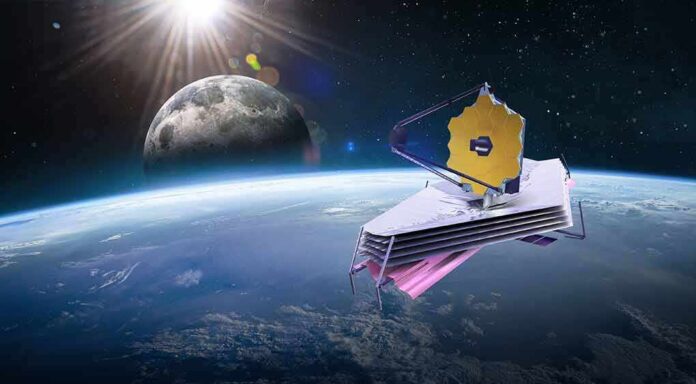
NASA is planning the Habitable Worlds Observatory to find and directly image Earth-like planets around nearby Sun-like stars. Agency materials describe a mission built to identify and study about twenty-five promising worlds and probe their atmospheres for signs of habitability and possible life. The plan builds on lessons from the Hubble Space Telescope, the James Webb Space Telescope, and the Nancy Grace Roman Space Telescope to achieve the extreme image contrast needed to spot small rocky planets beside bright stars.
NASA’s science pages say this observatory is the first designed specifically to search for signs of life beyond our solar system. That includes looking for markers of oceans and clouds, and testing for gases that could hint at biology. This is a focused goal, not a vague promise. The target list work and yield studies show planners expect a meaningful sample size to test, not a lucky break. One telescope cannot answer everything, but this one is scoped to move the needle.
Why This Fits the Decadal Playbook—and Why That Matters
The National Academies’ Astro2020 survey recommended a large ultraviolet, optical, and infrared space telescope to do high-contrast imaging and spectroscopy of nearby exo-Earths. NASA framed the Habitable Worlds Observatory as its direct response to that guidance. This is how major space science moves forward: defined goals, staged technology, and a clear line from recommendation to mission concept. That structure lowers risk, focuses spending, and helps Congress and taxpayers track progress step by step.
For readers concerned about waste and mission creep, this process helps enforce discipline. The decadal path ties the mission to specific science returns and sets a standard for reviews and milestones. NASA also announced selections to mature key technologies for the observatory, signaling competition and accountability in early industry work. That matters when the task is hard: blocking starlight by factors of ten billion and reading faint planetary spectra demands steady engineering with transparent checks, not blank checks.
What “Direct Imaging” Really Means for Finding Life
Direct imaging means the telescope suppresses a star’s glare and takes actual pictures or spectra of a planet next to it. That allows scientists to look for water clouds, hazes, and gases like oxygen or methane in the right combinations. The Astro2020 vision called for studying roughly two dozen exo-Earths to test whether any show signs of habitability or even biosignatures, such as certain gas mixes that are hard to explain without life. That sample size gives statistics, not just a one-off case.
NASA’s plan leverages proven tools and adds new ones. A next-generation coronagraph blocks starlight inside the telescope. Precision optics and stability keep the image steady. Spectrographs then read the planet’s light across colors to uncover chemistry. This is slow, careful work. It does not promise aliens on day one. It promises targeted looks at the nearest best bets, using methods built to rule out false alarms and deliver data everyone can check and trust.
Timelines, Limits, and What Comes Next
NASA describes the Habitable Worlds Observatory as a pre-formulation concept backed by technology maturation and community studies. Reporting places any launch well into the next decades, after design, reviews, and budget approvals are complete. That timeline is long, but it reflects reality. The same deliberate path turned the James Webb Space Telescope from a hard idea into a working observatory that now produces breakthrough science. This mission follows that proven arc, with added focus on life-search goals.
In a recent open-access article published in @PASPJournal a spectral energy distribution analysis for Habitable Worlds Observatory target stars is presented. https://t.co/9Aa5t6d0vt. -JGM pic.twitter.com/e0kYynPV6O
— Publications of the Astron Society of the Pacific (@PASPJournal) September 8, 2026
Conservatives want smart spending with tangible returns. This mission’s design-to-objective link is clear: find and study about twenty-five nearby Earth-like planets for habitability and possible biosignatures. The decadal framework and early industry selections signal oversight and competition, not open-ended funding. If the Habitable Worlds Observatory succeeds, America will lead the world in answering a question as old as humanity—are we alone—by doing it the right way: with clear goals, hard data, and accountable stewardship.
Sources:
newscientist.com, science.jpl.nasa.gov, science.nasa.gov, science.gsfc.nasa.gov, planetary.org