
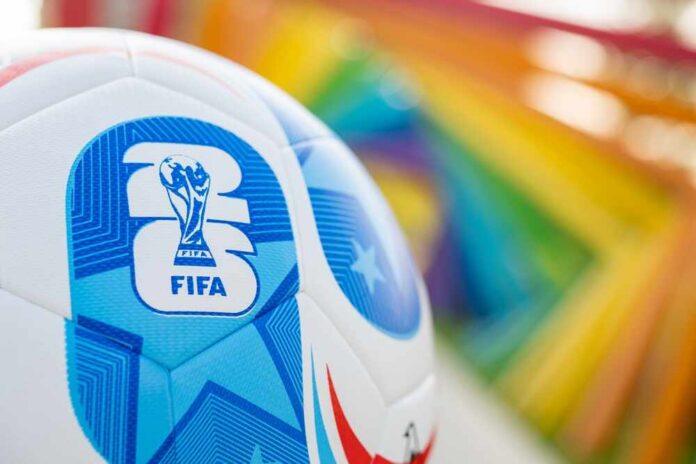
With the 2026 World Cup headed for U.S. stadiums, global watchdogs are warning that America’s immigration crackdown—and heavy-handed protest policing—could turn a once-in-a-generation event into a constitutional stress test.
Story Snapshot
- Amnesty International says the U.S. is “facing a human rights emergency” ahead of the 2026 FIFA Men’s World Cup, with immigration enforcement and protest restrictions as central concerns.
- The tournament spans the U.S., Canada, and Mexico, but the U.S. hosts roughly 75% of matches, making American domestic policy the main pressure point.
- Amnesty cites 2025 deportations topping 500,000, plus aggressive ICE operations and city-level cooperation agreements that critics say increase profiling risks.
- FIFA has acknowledged concerns and labels risk as elevated, yet critics say there are still no binding protections for fans against raids, detention, or discriminatory screening.
Amnesty’s warning: immigration enforcement collides with a “welcoming” tournament promise
Amnesty International’s March 30, 2026 report argues that the U.S. environment surrounding the World Cup could endanger fans, workers, journalists, and nearby communities, focusing on mass deportations, racial profiling, and a tightening of protest space. The warning lands as the U.S., in Trump’s second term, is already stretched by war pressures abroad while voters at home are exhausted by rising costs and more conflict than they were promised.
Amnesty’s headline risk is simple: a global event depends on millions of ordinary people traveling, gathering, and speaking freely, while federal enforcement tools are designed to detain, remove, and disrupt. The report highlights that teams may receive streamlined treatment, but protections for fans are unclear. That gap matters because the U.S. is slated to host the bulk of matches, and any enforcement surge near venues would ripple across the entire tournament.
What the data points to: deportations, raids, and city agreements that raise profiling concerns
Amnesty points to 2025 deportations surpassing 500,000 people, including roughly 230,000 interior arrests and about 270,000 removals tied to the border. It also highlights ICE operations described as paramilitary-style and conducted near homes, schools, and workplaces, which critics say create a broader “climate of fear.” Separate from federal action, some host cities—Dallas, Houston, and Miami are singled out—signed agreements to collaborate with ICE.
The civil-liberties question for Americans who care about limited government is not whether immigration laws exist, but how enforcement is carried out when the world is watching and when families and bystanders are swept into uncertainty. If enforcement relies on broad profiling triggers, heavy checkpoints, or aggressive sweeps, the practical result is chilled movement and speech. Amnesty’s critique is that the tournament could amplify those effects precisely because crowds and travel create more opportunities for contact with authorities.
Protest rights and public order: where security planning can test First Amendment boundaries
Amnesty and allied rights groups warn that the World Cup may become a flashpoint for protest—and that the U.S. response could skew toward suppression. Their report points to restrictions on protest and past crackdowns as a relevant precedent, and it cites the June 2025 deployment in Los Angeles, when the federal government federalized 4,000 California National Guard troops during immigration-related unrest. FIFA’s own experience at Qatar 2022 is also referenced as a cautionary tale about suppressing political expression.
For conservatives who value constitutional limits, the concern is less about whether authorities can secure stadiums and more about whether “security” becomes a catch-all justification for curbing lawful assembly, press access, and viewpoint diversity. Amnesty’s materials do not provide a finalized U.S. security blueprint for 2026, so the strongest factual point is the absence of clear guarantees—leaving a policy vacuum that could be filled by whichever agencies have the most operational control on the day.
FIFA’s leverage, unanswered questions, and the uneven readiness of host cities
FIFA has said it expects host governments to implement entry measures and that it is monitoring human-rights concerns, but critics argue those statements have not translated into enforceable protections. Amnesty reports that only 4 of the 16 host cities have human-rights plans, and none of those plans addresses immigration enforcement. That is a specific, measurable gap: if cities and organizers have plans for crowds, traffic, and policing, but not for immigration interactions, then predictable friction points remain unplanned.
"United States ‘facing human rights emergency’ ahead of World Cup says Amnesty International" – The Independent #SmartNews https://t.co/zktUrQg1mf
— George Leroy Tirebiter (@GeorgeLerofim) March 30, 2026
What’s missing from the public record in these sources is a detailed, binding framework covering fan screening, detention standards, access to counsel, or limits on venue-area raids. Without that, the World Cup risks becoming a political Rorschach test: rights groups will highlight abuses, while voters already skeptical of global institutions will resent international scolding—especially as the country is managing war, inflation anxiety, and a base divided over foreign entanglements. Transparent rules, applied consistently, would reduce the chance that security and immigration policy collide in ways that erode trust.
Sources:
Global: FIFA and World Cup hosts must prevent tournament becoming a threat to fans and communities
Humanity Must Win: Defending rights, tackling repression at the 2026 FIFA World Cup
Humanity Must Win: Defending rights, tackling repression at the 2026 FIFA World Cup (PDF)
World Cup a year out: growing attacks on rights