

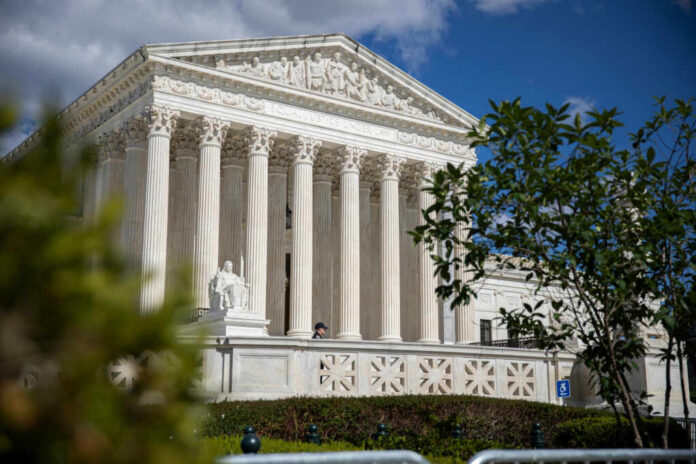
Justice Amy Coney Barrett delivered an unprecedented rebuke to Justice Ketanji Brown Jackson’s dissent in a landmark birthright citizenship case, exposing deep fractures on the Supreme Court as President Trump’s executive power expands while judicial checks crumble.
Story Snapshot
- Supreme Court’s 6-3 decision allows Trump’s executive order limiting birthright citizenship to proceed by curbing nationwide injunctions against federal actions
- Barrett’s majority opinion dedicates multiple pages to dismantling Jackson’s dissent, calling it “startling” and untethered to over 200 years of legal precedent
- Jackson warns the decision enables executive overreach resembling monarchy, risking the “downfall of governmental institutions”
- Trump’s order denies automatic citizenship documentation to children born to undocumented or temporary visitors, reinterpreting the 14th Amendment’s jurisdiction clause
Barrett Unleashes Rare Judicial Rebuke
Justice Amy Coney Barrett authored a blistering majority opinion in Trump v. CASA, Inc., systematically dismantling Justice Ketanji Brown Jackson’s dissenting arguments in language rarely seen between Supreme Court justices. Barrett characterized Jackson’s position as a “startling line of attack” that ignored two centuries of constitutional precedent and equity doctrine. The June 27, 2025 decision allowed President Trump’s executive order restricting birthright citizenship documentation to move forward by limiting the power of lower courts to issue nationwide injunctions blocking federal policies. Barrett’s pointed criticism signals escalating tensions within a Court already divided along ideological lines on executive authority.
Executive Power Expands as Judicial Restraints Weaken
The Court’s 6-3 conservative majority ruled that district courts overstepped by issuing universal injunctions that blocked Trump’s immigration order nationwide, rather than limiting relief to named plaintiffs. Trump’s executive action interprets the 14th Amendment’s phrase “subject to the jurisdiction thereof” narrowly, excluding children of undocumented immigrants from automatic birthright citizenship. This interpretation challenges longstanding precedent dating to United States v. Wong Kim Ark in 1898. The decision empowers the executive branch to implement controversial policies while legal challenges proceed, fundamentally shifting the balance between presidential authority and judicial oversight. Twenty-four Republican state attorneys general supported Trump’s position, citing fiscal burdens from illegal immigration on state resources and services.
Jackson’s Stark Warning About Constitutional Erosion
Justice Jackson’s dissent accused the majority of enabling authoritarian executive overreach that threatens America’s constitutional framework. She warned the decision could lead to the “downfall of governmental institutions” and questioned whether the Constitution remains a viable constraint on presidential power. Jackson argued that limiting injunctive relief strips courts of their ability to check executive actions that affect millions of Americans. Her forceful language reflects liberal justices’ concerns that the conservative majority prioritizes executive efficiency over constitutional safeguards. This rhetorical clash exposes fundamental disagreements about governmental power that resonate with conservatives who elected Trump to drain the swamp, yet now watch executive authority expand in ways that could outlast any single administration.
Constitutional Principles Versus Political Outcomes
The decision reveals uncomfortable tensions for Trump’s base between supporting their president’s immigration enforcement and preserving constitutional limits on federal power. While the ruling advances Trump’s agenda on illegal immigration, it sets precedent that future presidents could exploit to bypass judicial review on issues conservatives hold dear, including gun rights and religious liberty. The 14th Amendment’s Citizenship Clause has anchored American identity since Reconstruction, and its reinterpretation through executive order rather than legislative action raises questions about governmental overreach. States gain short-term relief from immigration costs, but the long-term implications for separation of powers and federalism remain unclear. This case underscores how procedural victories today can become weapons against constitutional principles tomorrow, regardless of which party controls the White House.
Sources:
Justice Amy Coney Barrett rips Ketanji Brown Jackson over birthright citizenship dissent
Supreme Court hands Trump win on birthright citizenship, judicial oversight
Trump v. CASA, Inc. Supreme Court Opinion
SCOTUSblog Coverage of Related Developments