
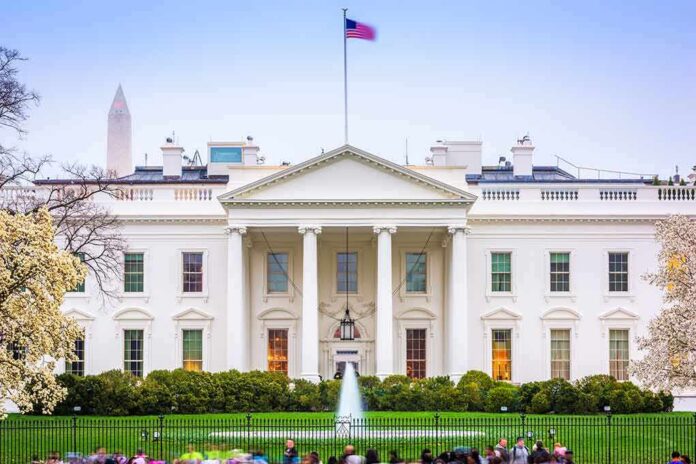
The White House warned House Democrats that using threats and abusive subpoenas to target executive-branch staff could cross into “blatant criminality,” putting Congress on notice before new probes begin.
Story Highlights
- White House counsel sent a written warning to incoming House Oversight leadership citing constitutional limits.
- The letter says threats that deter public service and unlawful subpoenas may trigger criminal scrutiny.
- Democrats, led by Rep. Robert Garcia, claim broad Article I oversight power and promise investigations.
- Supreme Court precedent requires a real legislative purpose for congressional investigations into a president.
White House Letter Draws a Constitutional Line
White House Counsel Will Scharf sent a three-page letter to Representative Robert Garcia on November 9, 2026. Scharf wrote that threats aimed at scaring executive-branch officials, and process used only to harass, can become criminal. He added that issuing unlawful subpoenas to strip citizens of constitutional rights may warrant further review. The counsel’s office grounded its warning in a basic rule: Congress can investigate to pass laws, but it cannot punish or act like a prosecutor.
The letter arrived as Democrats prepared to take control of the House Oversight Committee. News reports highlighted Democratic promises of aggressive probes and possible subpoenas aimed at President Trump’s team. The White House cited those plans as evidence of a risk that some actions could cross legal lines. The warning did not name a specific subpoena as unlawful. It served as a bright-line notice that abusive tactics would face a legal response if they lacked a valid legislative aim.
Courts Require a Legitimate Legislative Purpose
Supreme Court rulings make the standard clear. Courts expect Congress to tie requests to a real legislative task when they target a president or his records. In Trump v. Mazars, the Court directed judges to test whether subpoenas meet that bar and to weigh separation-of-powers concerns. That case does not erase oversight. It does set guardrails. The White House letter leaned on that logic to say punishment and show trials are out of bounds, while focused lawmaking remains in bounds.
Congressional research further shows how disputes get resolved. Historically, Congress used inherent contempt but now tends to rely on criminal contempt referrals or civil suits to enforce subpoenas. That path underscores a key point: oversight is lawful when it stays within constitutional limits, and fights over scope are settled through legal process, not threats. The administration’s message fits that lane. It signals that if House leaders issue broad or harassing demands, the next step will be legal testing, not political theater.
Democrats Claim Broad Oversight Power, Pledge Probes
Representative Garcia, set to lead House Oversight, pushed back. He said Congress’s authority comes from Article I and does not need White House permission. He argued that oversight helps Congress write laws to stop corruption and abuse, pointing to possible bills on preventing presidential family self-dealing. He cast the White House letter as an attempt to chill the committee’s work and said Democrats would move ahead with planned inquiries.
Media reports quoted Garcia describing targets that include alleged donor influence and policy trades. He framed those lines of inquiry as tied to anti-corruption legislation, not criminal prosecution. Those claims speak to the same test the Supreme Court uses: a clear legislative purpose. If Democrats keep demands narrow and tied to real bills, courts have upheld that approach. If they use subpoenas to intimidate or punish, their footing weakens fast under the Constitution.
What It Means for Readers Who Expect Fair Oversight
For many Americans, the issue is simple. Oversight is vital when it protects taxpayers, reins in waste, and guards liberty. But it becomes abuse when lawmakers threaten citizens and hunt political enemies. The White House’s warning aims to protect executive-branch workers who serve the country and to keep Congress inside constitutional rails. That stance defends separation of powers and the rule of law, which shield all of us from government overreach.
Rep. Robert Garcia (D-CA), incoming House Oversight Committee chair after the 2026 midterm Democratic gains, publicly enumerated targets including Kristi Noem, Kimberly Guilfoyle, Donald Trump Jr., Eric Trump, and Stephen Miller (now White House Chief of Staff) on CNN, stating he… https://t.co/IztYNZaaoZ
— Durwin Lloyd, ND (ret) (@LloydDurwin) November 12, 2026
The next weeks will test both sides. If House Democrats pair requests with specific bills and clear policy goals, they can do their job and avoid legal trouble. If they flood the zone with sweeping demands meant to scare, they risk court losses and possible referrals. The Constitution sets the standard. The Supreme Court has marked the path. Americans deserve oversight that fixes problems, not partisan punishment dressed up as lawmaking.
Sources:
redstate.com, abc3340.com, abc27.com, washingtonexaminer.com, postguam.com, hngn.com, congress.gov